Posted on

Product Review – Nanuk Hard Case: Top-tier protection for your gear

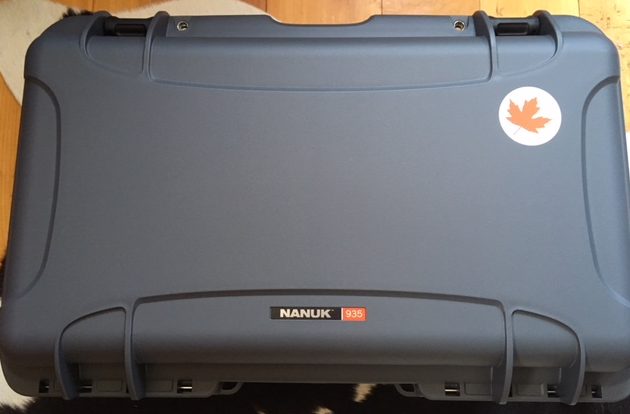
The 935 Roller Case by Nanuk. Solid protection for your sensitive gear.

In an effort to organize some of my equipment, I have gone through several options to address issues surrounding ease of transport, durability, security and protection.  I initially went with low-cost/low-quality options such as boxes, bags, duffels, etc., and tried to keep everything organized, protected from damage and loss and something properly sized to fit everything in one piece.  I was hesitant to go with a Pelican case, as their price point was too  high for what I was looking for, so I searched for other options.

Enter Nanuk Professional Protective Cases, by Plasticase.

Earlier this year, when I was at the Toronto Sportsman’s Show, I had the fortune of meeting Dan from Nanuk (pronounced “Na-Nook”, the Inuit word for the mighty Polar Bear) and exchanged contacts.  Their display was expansive and their options for protective cases ranged across sizes, colours, shapes and options.  I also liked the fact that they were Canadian and also that they offered a Military/Law-Enforcement discount.

A couple of weeks ago, after several failed trials to organize my gear the way I wanted, I reached out to Dan and arranged to purchase the Nanuk 935 hard case.  The following covers my experience dealing with Nanuk and my impressions of the Nanuk 935.

First off, the service was FAST.  As in the case arrived at my door within 48hrs.  I was impressed.  The customer service and administration was excellent.  The team at Plasticase is very efficient.

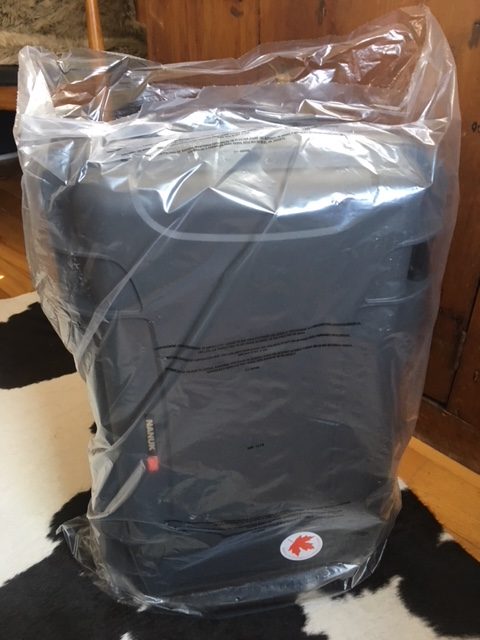
The 935 arrived mint.
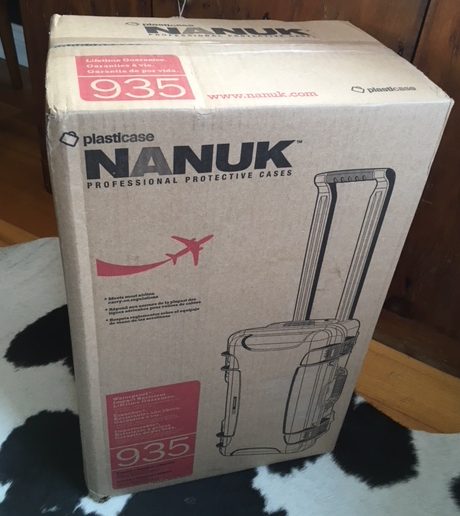
My first impression of the 935 (even though I had seen it before at the Sportsman’s Show) was how solid it felt.  Everything on this thing is heavy-duty.  Not a piece feels flimsy or cheap, despite its relative light weight.

Here is a rundown of some of the key features of Nanuk cases generally and the 935 Roller Case in particular:

  • Features the “Powerclaw” latching system.
  • Waterproof:  rated to IP67 for 30mins under 1m(3.3′) of water.
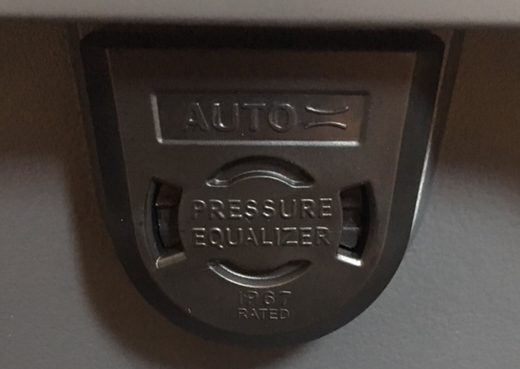
  • Automatic pressure release valve
  • Hard-wearing NK-7 resin for impact resistance
  • Stainless steel hardware
  • Model-specific bezel and gasket system to ensure a watertight seal
  • Handle & lid stays
  • Polyurethane wheels
  • Conditional Lifetime Warranty
  • Model 935 features a 2-stage, heavy-duty pull handle for rolling the case behind you like a carry-on.
  • Model 935:  Interior dimensions (L x W x H): 20.5″ x 11.3″ x 7.5″ & Exterior dimensions (L x W x H): 22.0″ x 14.0″ x 9.0″, Weight 11.6lbs (5.2kg)
  • Carry-on compatible (check with your airline for specifics)
  • Comes in a variety of colours and internal configurations.
  • Made in Canada!

For more complete details about the Nanuk 935, go to the webpage here.

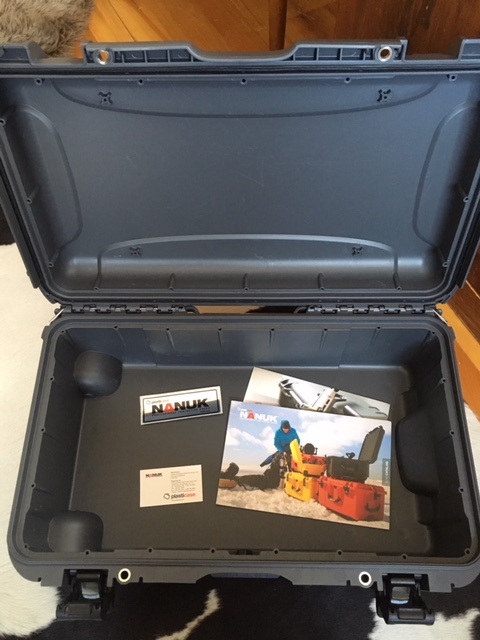
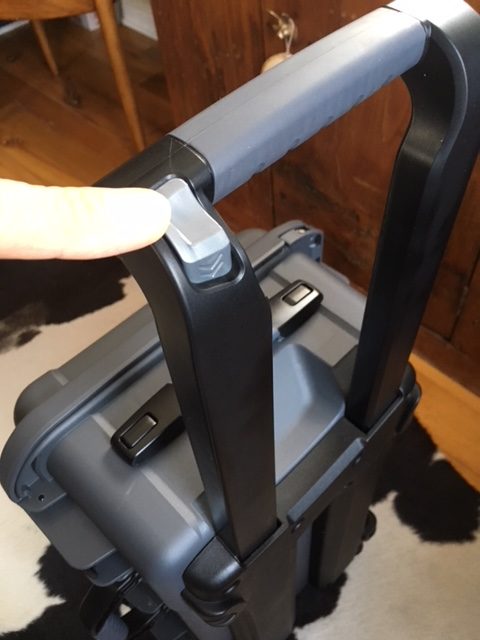
Below are more detailed photos with cations speaking to the above specifications and observations.
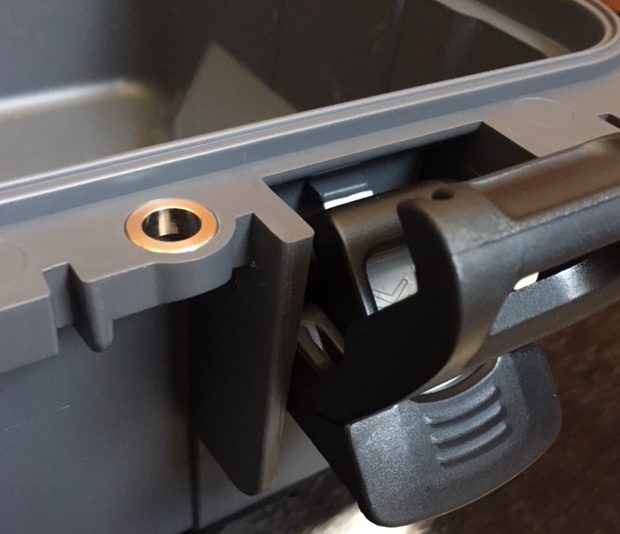
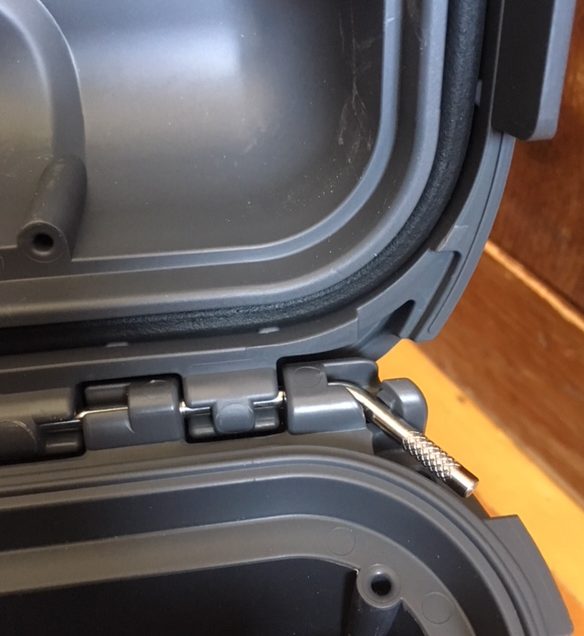
 

Lots of space inside.
Powerclaw latches are beefy, tough and connect with a positive and satisfying click. To open, you have to actuate the button and latch.
Stainless steel hardware and tough, large gasket seal to ensure long life and solid seal.
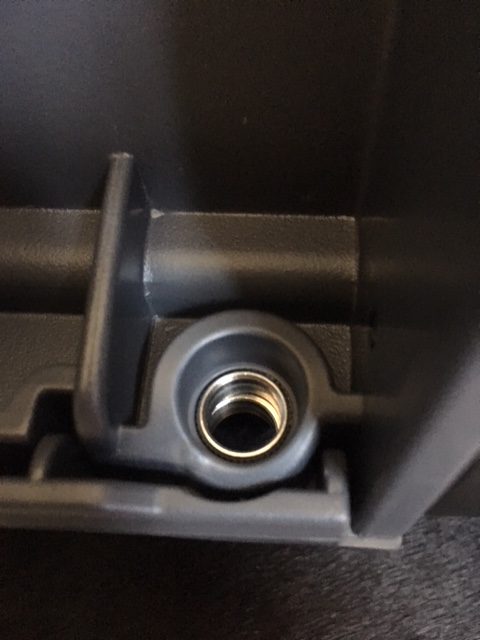
Steel-ringed (x2) rivets for padlocks. Make sure you get something high-quality. Nanuk cases don’t protect themselves from thieves.

As a note to the latching system, though the latching system is effective at preventing water and dust from getting in, it is NOT effective in securing the contents from unauthorized access.  It is a hair-pulling pet peeve of mine when I see people buy a top-of-the-line protective case (like a Nanuk or Pelican, etc) to store an expensive piece of equipment (like a tricked-out rifle, research gear, optics, etc) and then go to Home Depot and buy a $10 lock to keep it “secure”.  Just don’t.  Please.  If your investment in case and equipment is up there, why entrust it to a $10 lock?  Do yourself a favour and visit a proper locksmith and spend the $80-$120 or so for a high-quality padlock (Like an ABUS, Abloy, S&G or something similar) and keep your stuff protected.  Just do it.  You’ll also be interested to know that Nanuk now offers to retrofit the latches to lockable latches to TSA specifications if you would like to lock your Nanuk without a padlock.
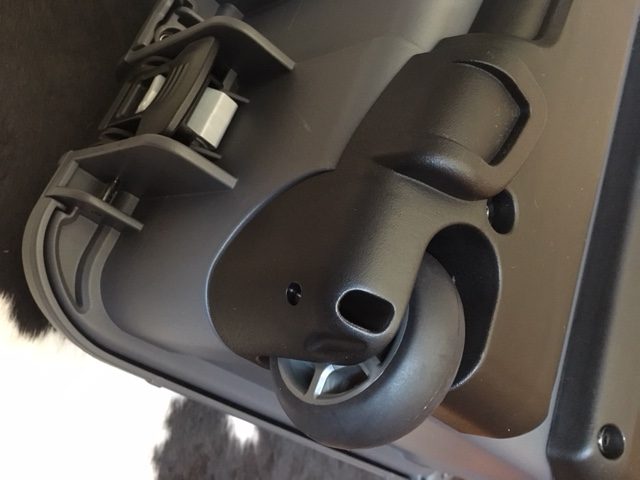
Heavy-duty polyurethane whees with stainless steel hardware roll smooth even when the case is fully loaded.
Substantial pull arm features a 2-stage adjustment and easy-access release button.
Automatic pressure relief valve.
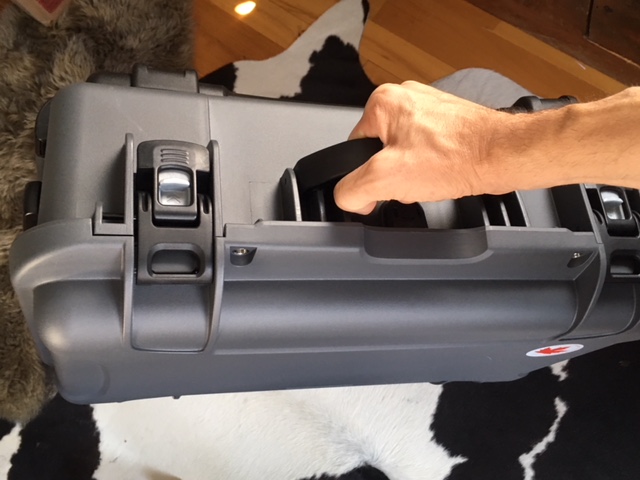
Easy to carry with 3 handle options, lightweight for what it is and comfortable grips.
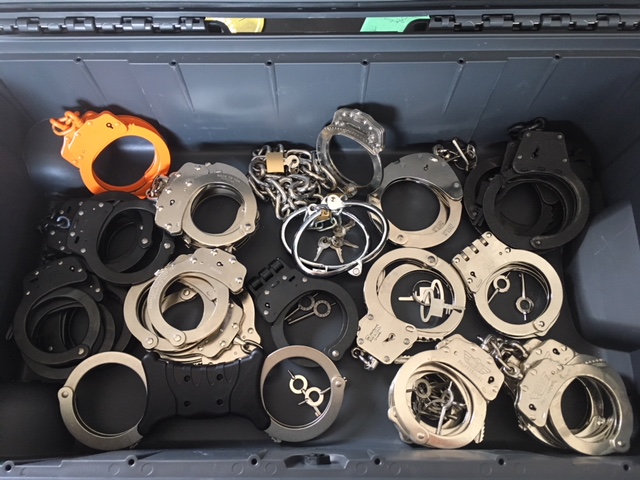
Can take a beating on the inside too.
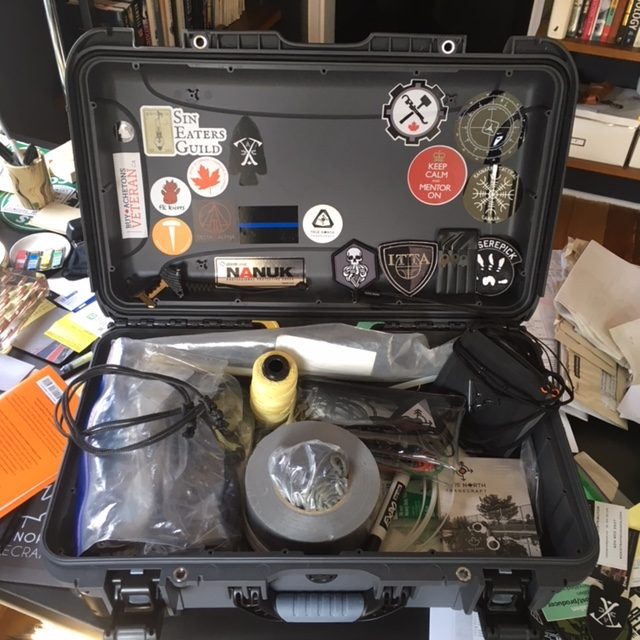
All loaded up. With room to spare. Fantastic piece of kit.


All in all, I am very impressed with the Nanuk 935.  You can take a look at their entire line of products here.

They feature protective solutions for everything from your smart phone to weapons cases, sensitive electronics, photography gear, laptops and even custom solutions for whatever you may need.

If you’re looking for a high-quality, Canadian-made protective case for your equipment, do consider Nanuk cases in your search.  Unfortunately, members of the general public will have to look for Nanuk dealers near you to purchase, but if you’re Military or Law Enforcement, you can buy directly from them.

Till next time, stay safe and stay crafty.



Posted on

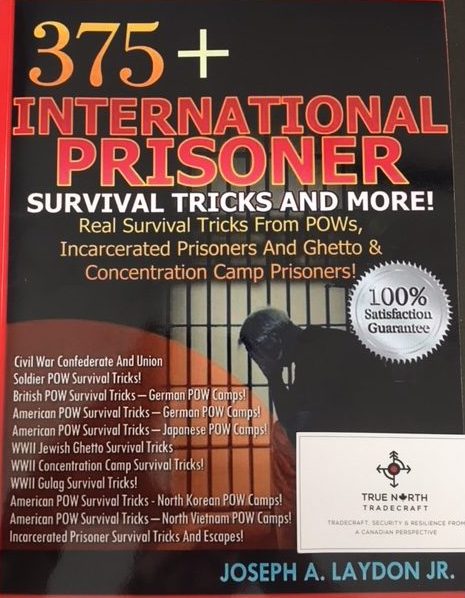
Book Review – 375+ International Prisoner Survival Tricks


A while ago I heard about a book which chronicled the history and evolution of skills and tips for the Prisoners of War (POWs) or captives in a foreign land.  After much digging, I contacted the author, Mr. Joseph A. Laydon Jr., and arranged to purchase a copy to be shipped to Canada.

Mr. Laydon was very kind and forthcoming in his communications with me and I received my copy (and a bunch of other goodies) from him shortly afterward.

Mr. Laydon’s compendium is a ~350-page tome of well researched historical material.  He has dug deep into the world of POWs (in an American context, specifically) from the US Civil War to Cold War-era and their methods of survival, escape and reunification through simple tips as well as in-depth case studies.

American POWs in Hanoi, North Vietnam.

As the nature of warfare has changed with the introduction of ever-advancing technologies, the realities of captivity remain.  Allied soldiers have been held captive in more recent conflicts such as the Gulf Wars, The Balkans/Former Yugoslavia and in the Middle East.  And though one never knows in advance the circumstances of one’s possible captivity, a study of historical methods (both by captors and captives) is beneficial.  It gives scope and depth of knowledge which may be adapted in given circumstances.  In some current theatres of conflict, one’s adversaries may tend to be on the less-technologically advanced side.  If one is to be effective in combating such foes, a study into their “low-tech” methods will yield insight into their weaknesses.  To that end, studying past historical methods of captivity and restraint allows for the operator or agent to understand the weaknesses in those methods and train to exploit those weaknesses to one’s advantage.

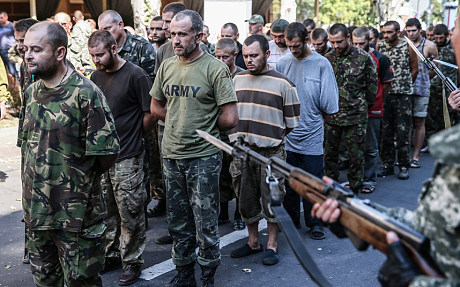
Captured “enemy combatants” in Ukraine.

As an example, “high tech” security features, such as locks and handcuffs, may be in use by one’s own forces, but in some areas in the world, technology may be 50-80 years behind the times, often using outdated and “low tech” restraints and locking mechanisms.  Awareness and training in the exploitation of these are crucial to one’s survival.

You never know where you’ll end up. Prepare now.

I would also argue that even by reading through it in a non-military or operational context, if one were to find themselves kidnapped or held in unlawful confinement, some of the points discussed in this book may be of help, again depending on the circumstances.  But the more you know, the more options you may have.

To bring this around full circle, Mr. Laydon does an excellent job of providing a thoroughly researched historical account of survival methods used by POWs and also the captivity methods of their captors and aggressors over a very long period of time across a wide range of theatres.  Even more useful are his personal notes from his time in the Military and through various survival schools.  All very useful information.  There are many practical and informative (and genuinely interesting) tips and tricks covered.  It is not an instructional manual, per se, but rather an in-depth reference highlighting many historical and contemporary methods and ideas for use in such environments.  The author has augmented historical methods with personal anecdotes and experiences to bring context.  There are no pictures or diagrams to see (though there are a few exercises to learn some of the tricks shown) however the sheer multitude of referenced tips and tricks leaves one much to internalize and think about.  I would recommend this publication to anyone looking to expand their knowledge of this subject matter.  Sometimes, the saying “what’s old is new again” may come to pass.  You never know, it may come in handy some day.

Though the information in this book is good to know,  Would highly recommend finding training in these skillsets in-person.  Nothing beats hands-on instruction and personal first-hand experience.

Joseph A. Laydon Jr. can be reached through www.survivalexpertbooks.com or at [email protected] and this book can be found on Amazon.com and Amazon.ca .  He has written many other books on various other survival-related topics, similarly sized and deeply researched.

Till next time, stay safe and Stay Crafty.

Posted on

Training Review: Counter Custody and Hostage Survival with 4TAC5 in Chicago, IL.

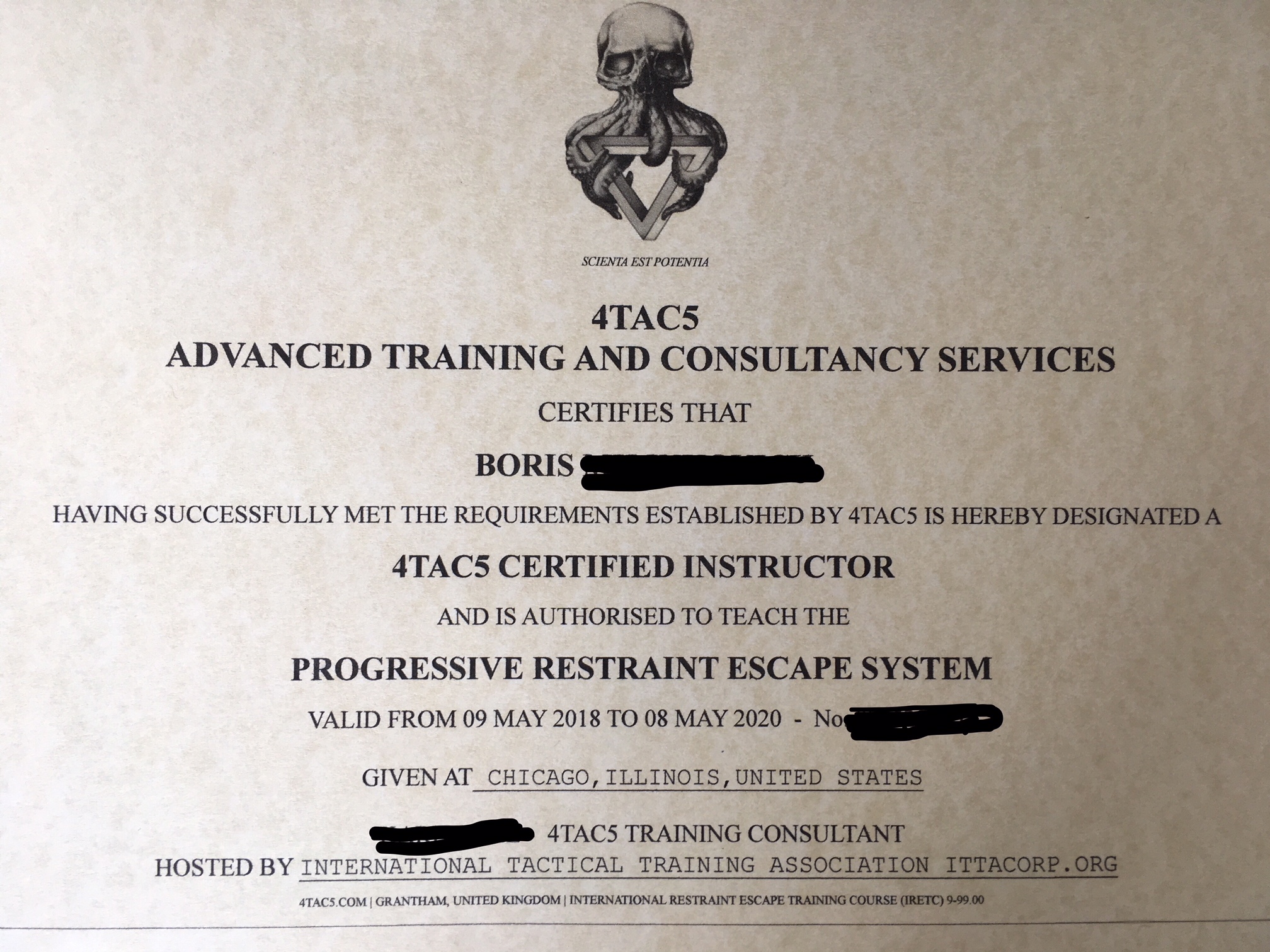
Training Review: IRETC with 4TAC5, Chicago, IL, May 2018

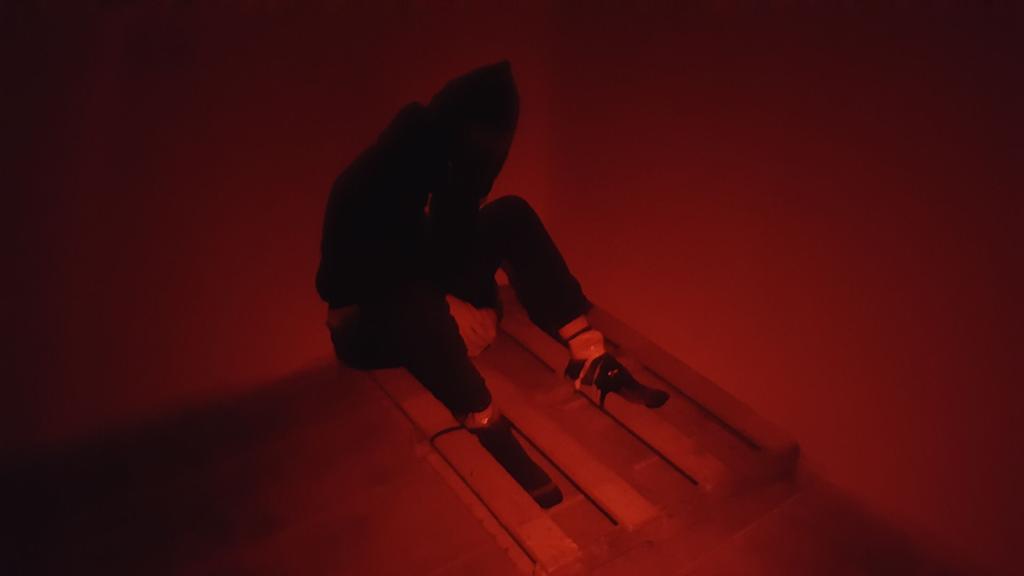
In May of this year (2018), I travelled to Chicago to expand my skills in the field of Counter-custody and counter-kidnapping but attending the IRETC Instructor Certification with Karl from 4TAC5.

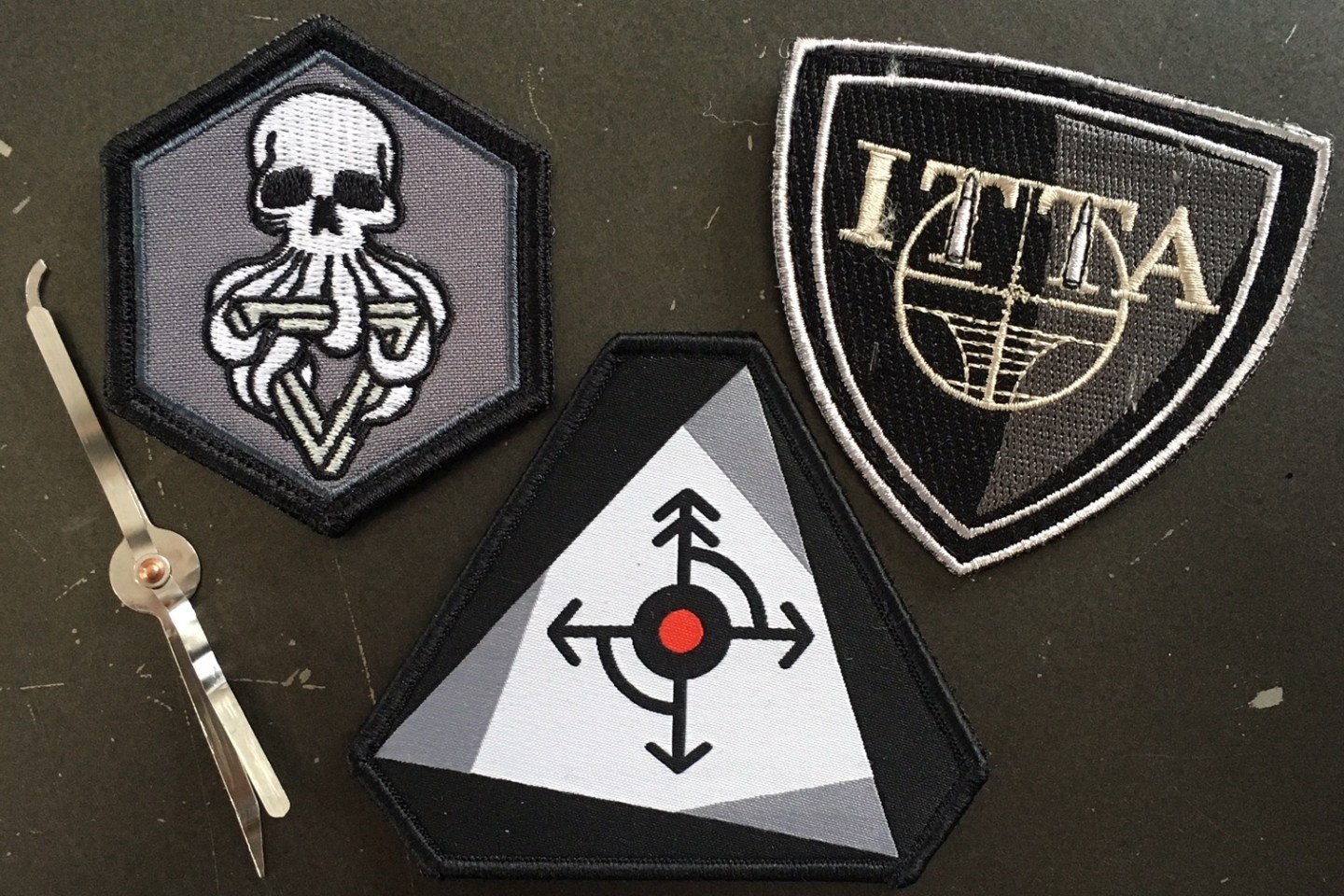
For the longest time I had been working towards attending the counter-custody instructor certification course with 4TAC5 – IRETC (International Restraint Escape Training Course). I had tried for months to connect with them and was planning to travel to their training base in England to attend it when I was referred to Aaron Cunningham of the ITTA (International Tactical Training Association) as they were going to be hosing IRETC in Chicago. As luck would have it this made things much more convenient and less expensive.

Upon arrival I made contact with Aaron and he picked me up from the airport. I treated him to breakfast for the courtesy. As I had only had communications with him through e-mail to that point it was good to finally put a face to the name and get to know him. After breakfast, Aaron and I took a little tour around Chicago (he showed me some of the sights and gave me some background to the respective history and current situations with specific neighbourhoods we were traversing) and then we did two more circles to the airport to pick up other attendees and finally to pick up our instructor, Karl, and make our way to the training facility and our lodgings.

There were 4 of us with Karl and Aaron. A small but diverse group of LEO/MIL personnel.

***I will not speak to the identities of the others in the training as they are currently operational with their respective security services, nor will I get into specifics of the training due to it’s nature. ***

Over that first evening we all had a chance to get to know one another and discuss the upcoming week of training. Admittedly, I was very excited to get the training started and build upon my existing skills.

The next day training started and we covered a LOT of ground. The content for day 1 was vaguely as follows:

  • Overview of material, counter-custody principles, kidnapping & hostage survival;
  • Detailed review of improvised restraints and manufactured restraints;
  • Improvised tools against restraints;
  • Mindset and tactics

I felt as if I’d been overloaded with information and it took me a while to process what I was learning. So much amazing stuff was coming to me – efficient and effective techniques and principles to put to use immediately. My hands and wrists were smashed and raw by the end of the day but it was well worth the pain to gain the knowledge and hands-on experience in a controlled environment where mistakes can be made and learning can occur. Very helpful when you get yourself in a pickle and need someone to cut you out so you can try again.

Day 2 was much the same in so far as having a firehose of info shot my way. After a great breakfast, we got fuelled up on coffee and a recap of the previous day’s material and dove right in.

  • Recap Day 1;
  • Tools, carry, concealment and deployment;
  • Handcuffs (various, identify, function, features)
  • More mindset and tactics;
  • Special tools (contents, function, use)
  • Anatomy of abduction and custody (phases, counter-intelligence, immediate actions)
  • Captivity & custody Exercise

Day 2 was a long day filled with more work, soreness and trial and error. However, the more exhaustively we practiced, the more confident I was with the little curve balls that were thrown our way and, with patience and focus, they could be overcome.

Day 2 dinner was another great time gelling with the group and expanding on the day’s lessons.

***BTW the food in Chicago was AWESOME!***

Day 3 was the Big Cahuna. Exercise after exercise after exercise, more scenarios and practice. Very involved to test our newly acquired skills and assure we’d assimilated the little tricks and remained focused on the task regardless of the negative stimulus applied. I found this culmination was a thorough test of my skills and my ability to apply them under stress and in unknown conditions.

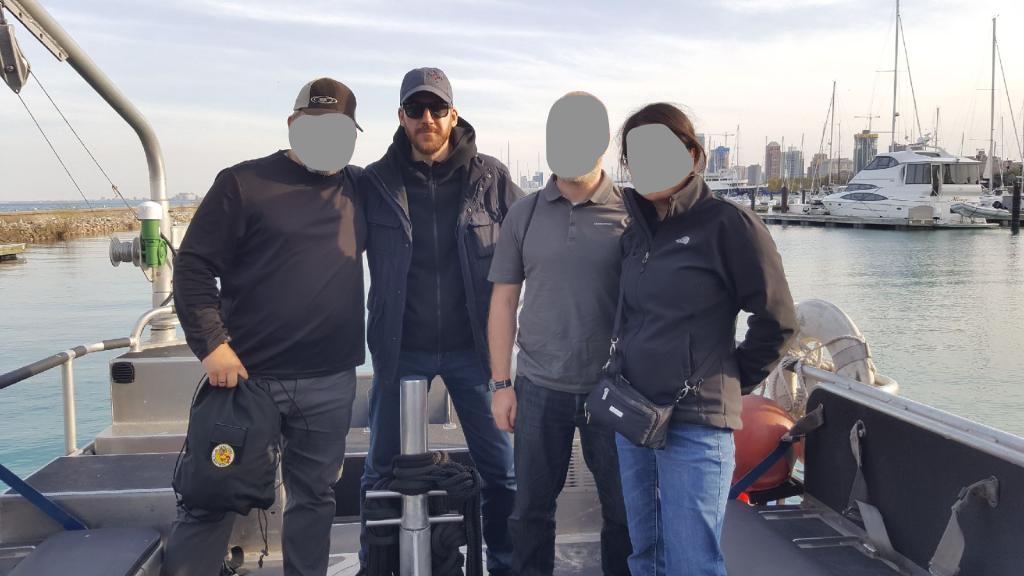
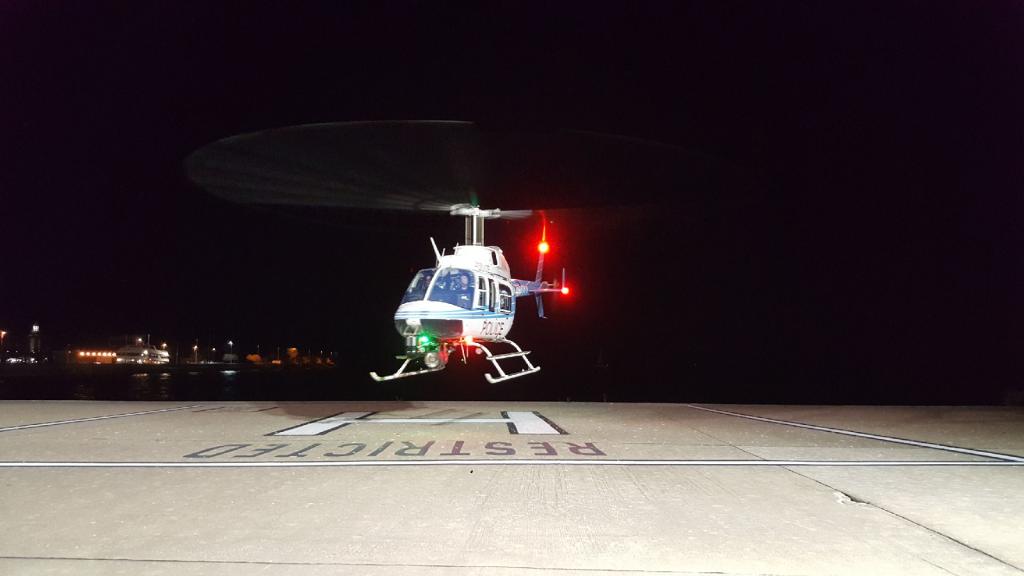
As a finale to the week, Aaron arranged a tour of the Chicago Police Marine Unit (with associated boat ride and waterfront tour) and topped it off with a ride-along with the Chicago Police Aviation Unit aboard a CPD helicopter above downtown Chicago. And, as it was Tuesday, what better dinner to have than tacos? I guess you really haven’t lived till you’ve watch a White Sox game at Wrigley Field from a police helicopter. Karl and I had a blast. What a great night.

The following day included a debrief, discussions, clean-up and certification presentations. My trip to the airport was bitter-sweet. I had made some new friends, learned and experienced some top-tier training and was leaving a very Toronto-like city (minus the 14 people who were shot while I was there).

I extend my sincerest thanks to Aaron Cunningham and the ITTA for hosting the training and for their wonderful hospitality. True professionals doing a great job.

To Karl of 4TAC5, thank you for your knowledge, patience and great sense of humour during the week.

To the Chicago Police Marine and Aviation units – thank you for your hospitality and for the amazing ride-alongs. Stay safe out there!

And to my fellow attendees, thank you for the laughs and lessons. Stay safe in your respective areas of operation and keep in touch.

For those of you who are in Canada looking for counter-custody and hostage survival training, keep your eyes peeled for our offerings for both civilians and military/law enforcement (restricted content) or contact us directly for private training solutions for your group.

For more information on mentioned training and entities, see below and feel free to contact us.

International Tactical Training Association

4TAC5

Oscar Delta

Hard Case Survival

Lockpicktools.com

Stay safe, stay crafty and ALWAYS HAVE AN ESCAPE PLAN.

Posted on

My Guest Post on the New Tactikey Blog

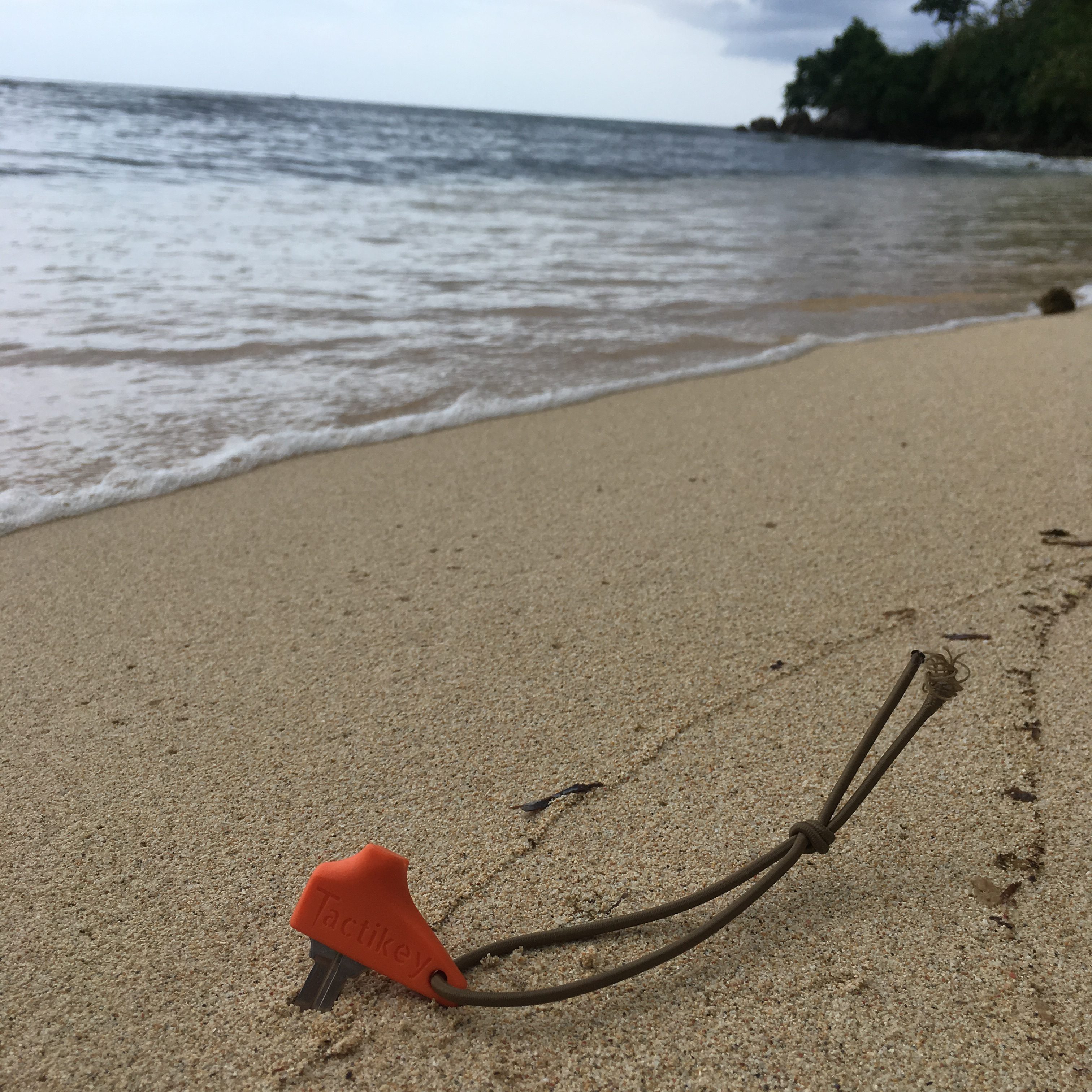
The Tactikey. The go-anywhere force multiplier.

I am humbled and honoured to have been asked by Tactikey to write the first guest blog article on the new Blog section of their site.

The article can be found here.

For my original review of the Tactikey, it can be found here.

Check out the Tactikey website and give them a follow, @tactikey.

Stay Safe and Stay Crafty.

Posted on

Training Review – Ed’s Manifesto – Mixed Skills Module in Washington, DC

The Sneak Reaper – Ed’s Manifesto

Over the weekend of 9-12 February, 2018, I travelled to Washington, DC & Alexandria, VA to train at District Combatives’ hosting of Ed Calderon (of Ed’s Manifesto), who was conducting a Mixed Skills module of training.

The trip down to DC from Toronto was relatively uneventful.  I got in early on Friday and spent the day sightseeing and getting the lay of the land in and around the area where we would be training.  I wasn’t sure as to what the training would entail, so with a map from the hotel front desk and my trusty feet, I learned the area around the training location and did some touristy things.

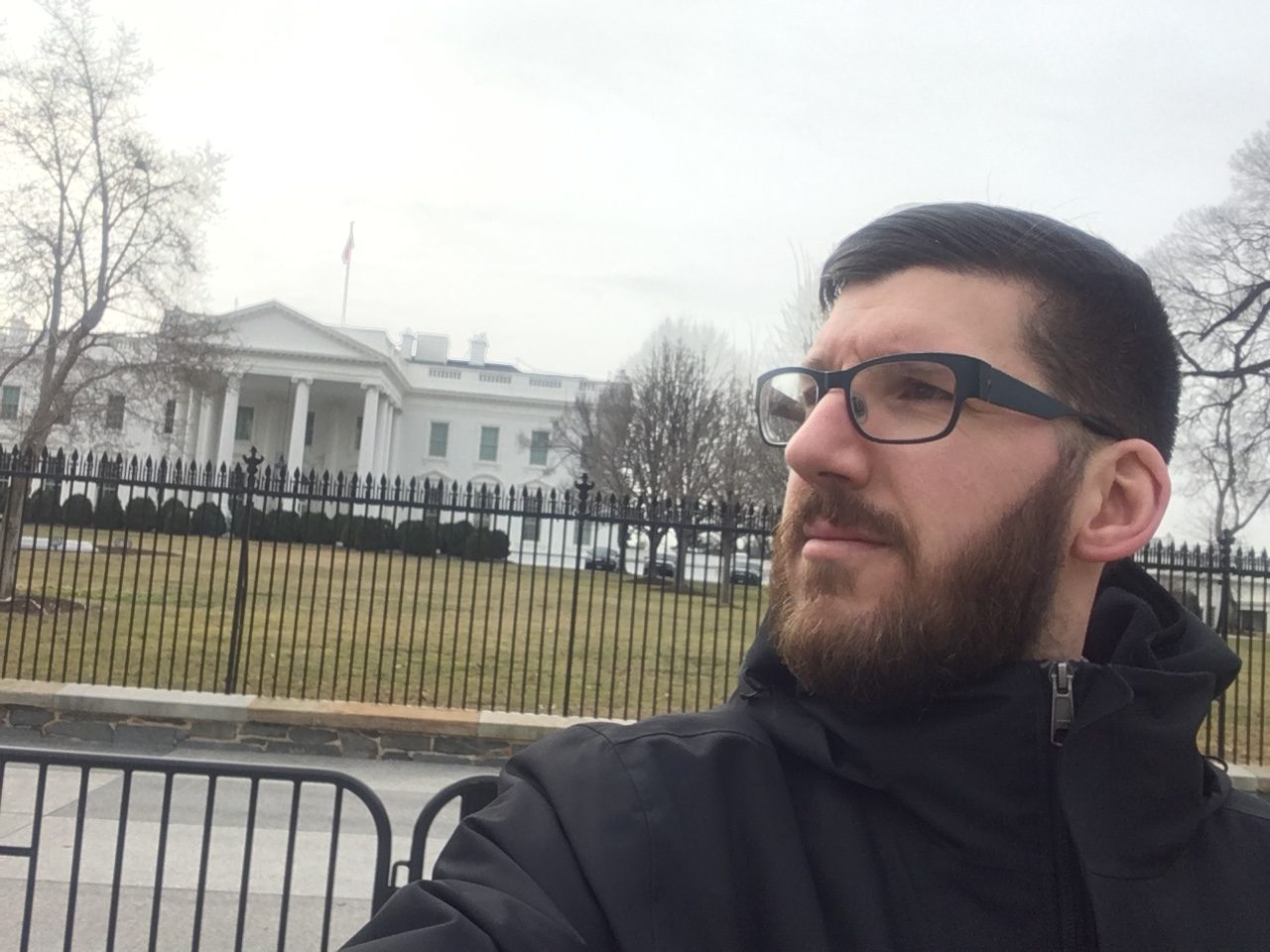
White House. One of the Secret Service guys gave me a great recommendation for breakfast 2 blocks away. He wasn’t wrong. Thanks Jerry!
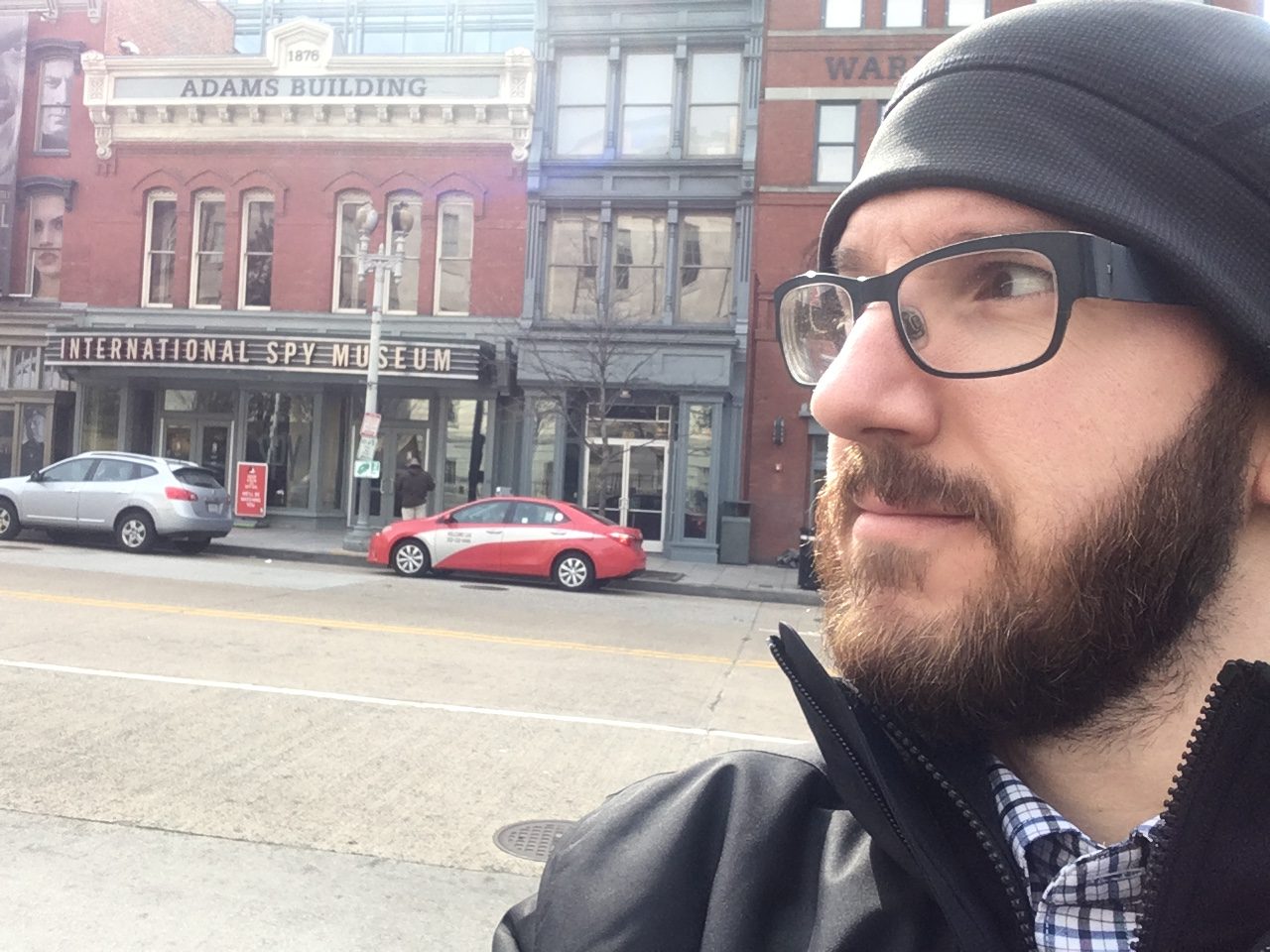
The Spy Museum. You can’t not visit if you’re in DC.
J. Edgar Hoover Building. Home of the FBI and X-Files.
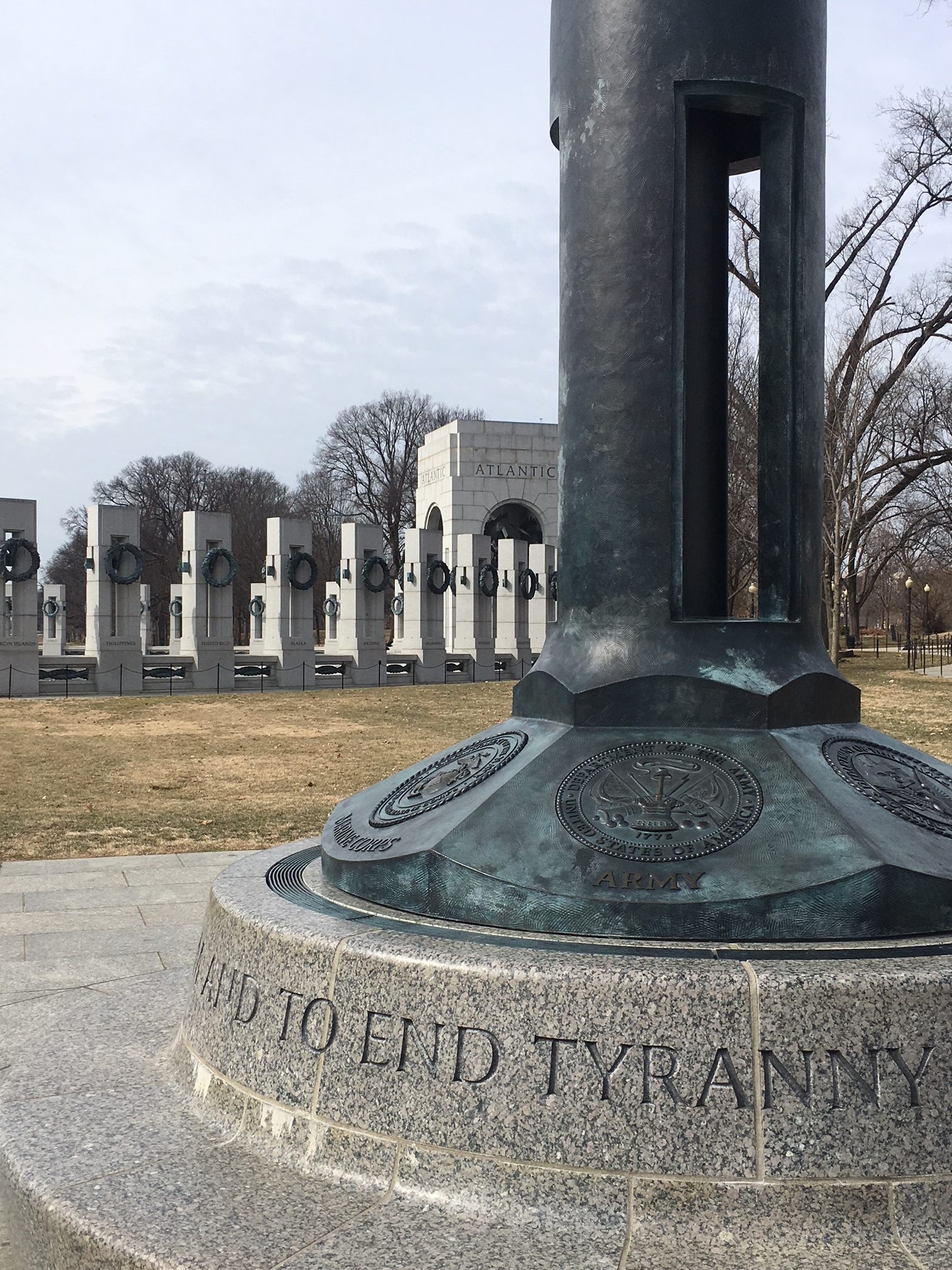
WW2 Memorial.
Vietnam Veteran’s Memorial.
The Mall.

I ended Friday night at a small pizza place which made amazing slices and helped myself to three and a “Mexican Coke” (produced in Mexico, in glass bottles, using sugar, not corn syrup) to top it off.

REALLY good pizza.

Day 1

Saturday morning was smooth.  I found my way easily to the training venue in the drizzle.  When I arrived, I was warmly greeted by Ben from District Combatives and handed a pile of liability waivers.  I was delighted to see a couple of familiar faces from previous training I had attended in the US and immediately took to catching up.  I even met a few others whom I’d only known as Instagram followers but quickly bridged to friends.  As the only Canadian in the room of almost 30, I felt humbled by the warmth and hospitality with which I was welcomed.  At the front, Ed held quiet court with a few people I didn’t recognize.   I took a seat and continued catching up with old friends and new.

When the room was packed and the time was right, Ben made introductions and we were immediately passed over to Ed who jumped right in.  Throughout the first day ,we covered:

  • restraints,
  • irregular custody,
  • weapons,
  • awareness and movement principles,
  • custody work, and;
  • a homework assignment to make improvised weapons.

I’m being deliberately vague with the above as if I get into greater detail, I’ll be writing all night and also because it’s better to experience it first-hand for yourself.

There were several takeaways from the day, not the least of which were that I need to do more yoga, focus on Endemics and “always have an escape plan”.  Sound advice for anyone.

The evening went well with food and drink around the corner and making new friends and sharing stories.  I especially felt humbled that I spent a fair amount of time speaking with Ed himself about the various Mexican mythologies and esoteric symbologies used by criminal groups.  Combining the entire evening’s discussions made for an educational, eye-opening and, at times, hilarious time.  Let’s just not rehash the saga of Jaramillo…

Some of us now know of Jaramillo. We shall not speak of his fate.

Day 2

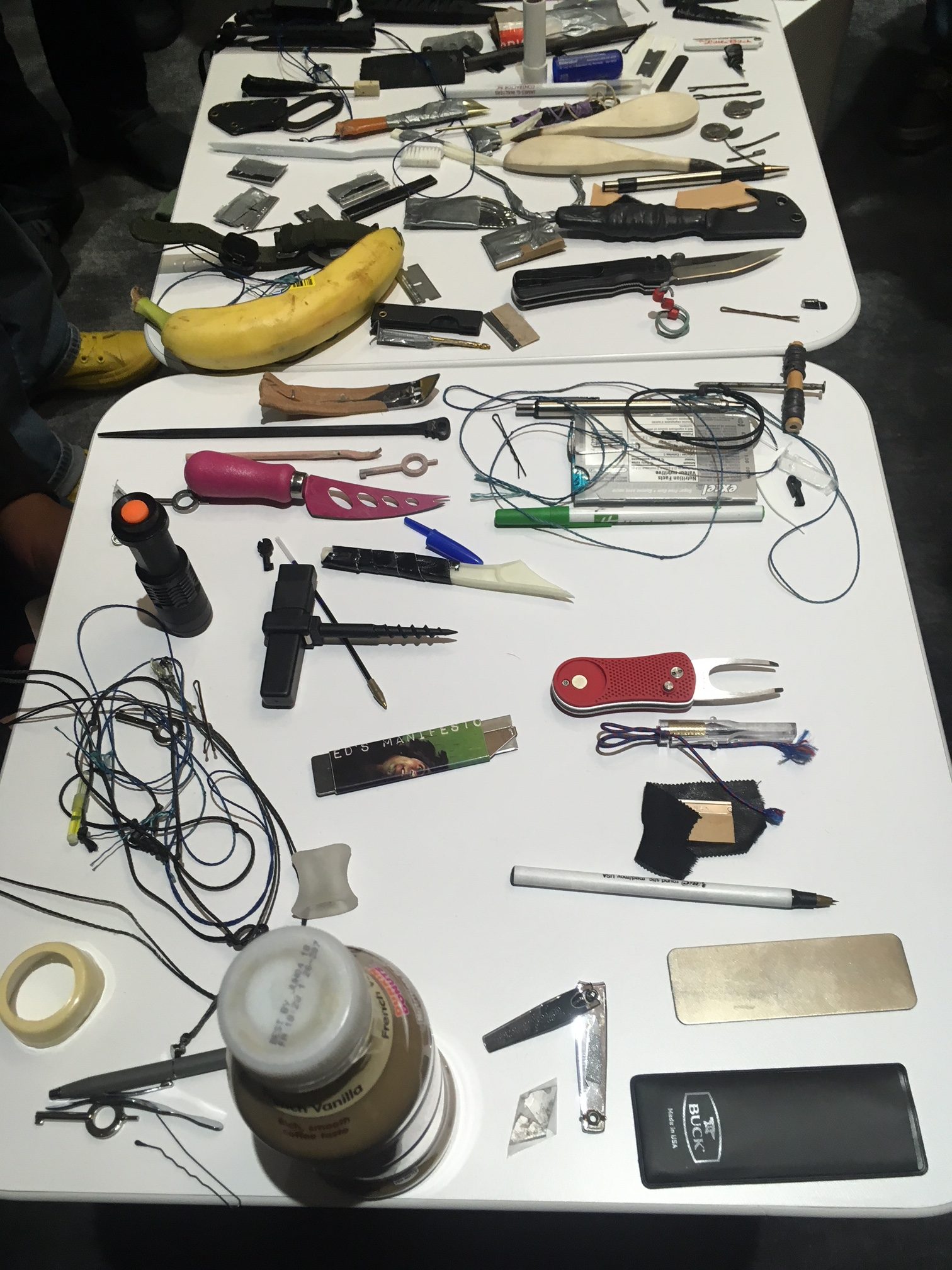
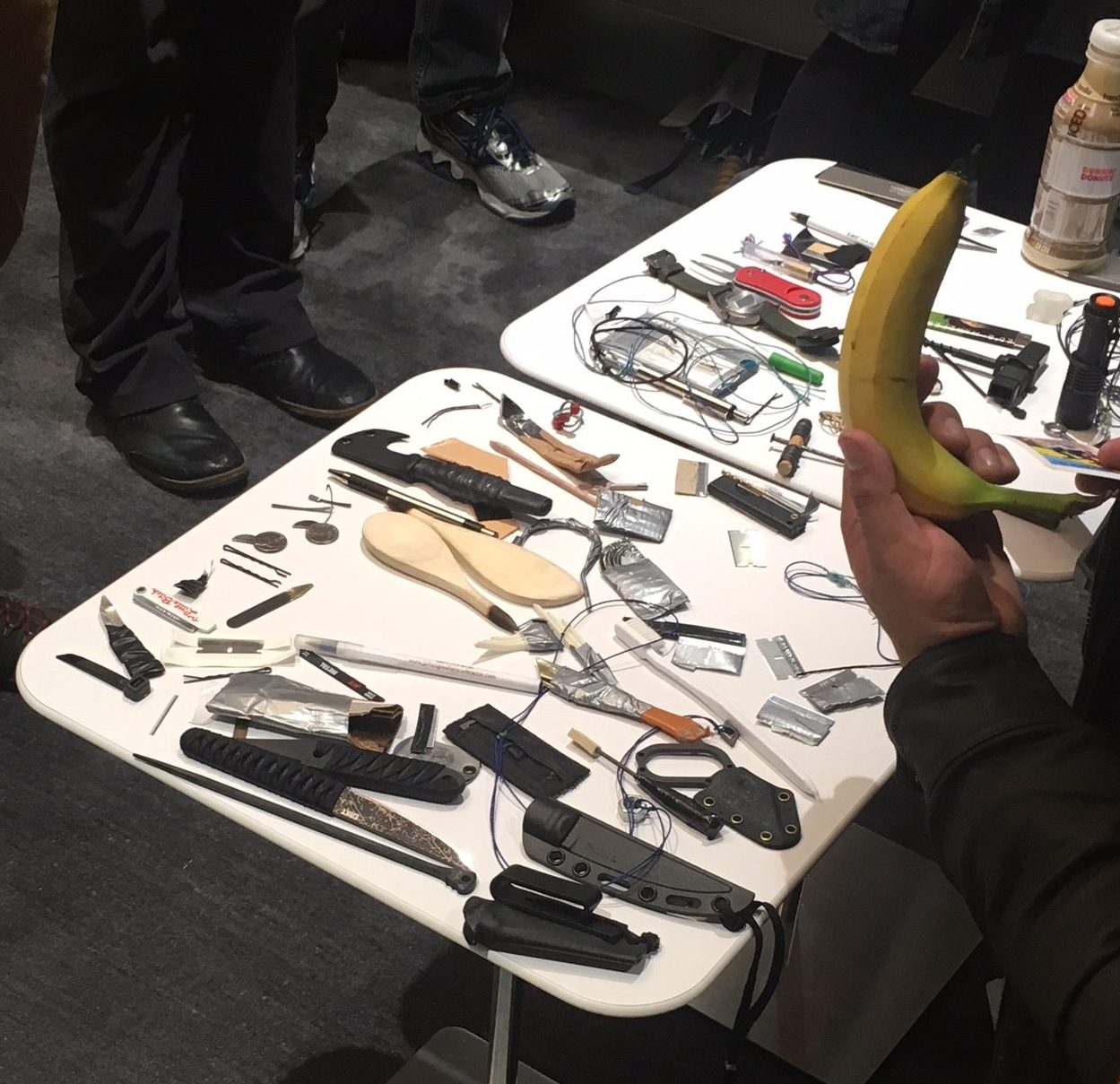
Entering the training location on Day 2 we were greeted at the door by metal detector and pat-down to see if we had absorbed and followed the previous days lessons and completed our homework.  The resulting “found” and “not found” tables displaying weapons of various varieties was quite interesting.

Top , found. Bottom, not found.


Banana…

We debriefed and had a chuckle over some stuff (the legendary banana shank and, we even had Tactikey represented!) and then moved right into improvised weapons & Shankology.  We covered:

  • Improvised weapons,
  • targeting,
  • knife work (inside and outside),
  • urban movement fundamentals and;
  • various hood rat shit.

By the time we ended on Sunday afternoon, I felt overloaded with new information and lessons learned.  So much had been fed to us that it would take me weeks to digest it all.

On a side note, I had come from Toronto (snowy and -10C) to Washington (drizzle and +10C) and was contacted by Air Canada that my flight was cancelled and I had been re-booked to the following morning.  This threw off my plans back home, but I made the most of it and spent the evening out for dinner again with Ed, Ben and several others from the course.  Many chicken wings and drinks later, we broke off and headed out.

My time over the weekend both training with Ed and Ben as well as socializing with them made me happy to have attended and to get to know them.

Ben (of DC Combatives) and I.  What a great guy.

Ben was very welcoming and Ed was a wealth of information and selfless in his sharing of knowledge.  So much so that I invited him to come to Toronto this year and to put on a similar seminar.  It would be an honour if he can make it work with his schedule.

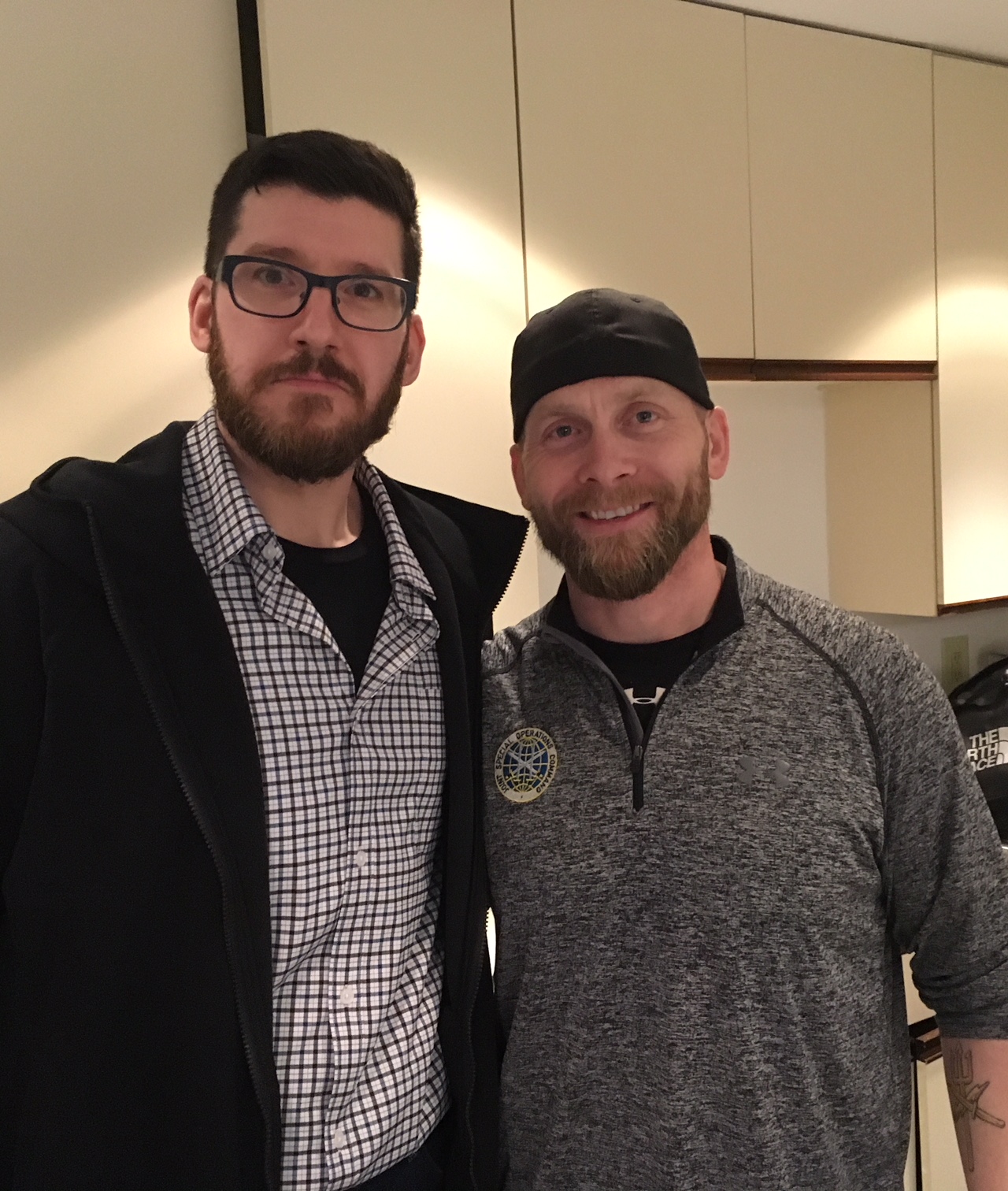
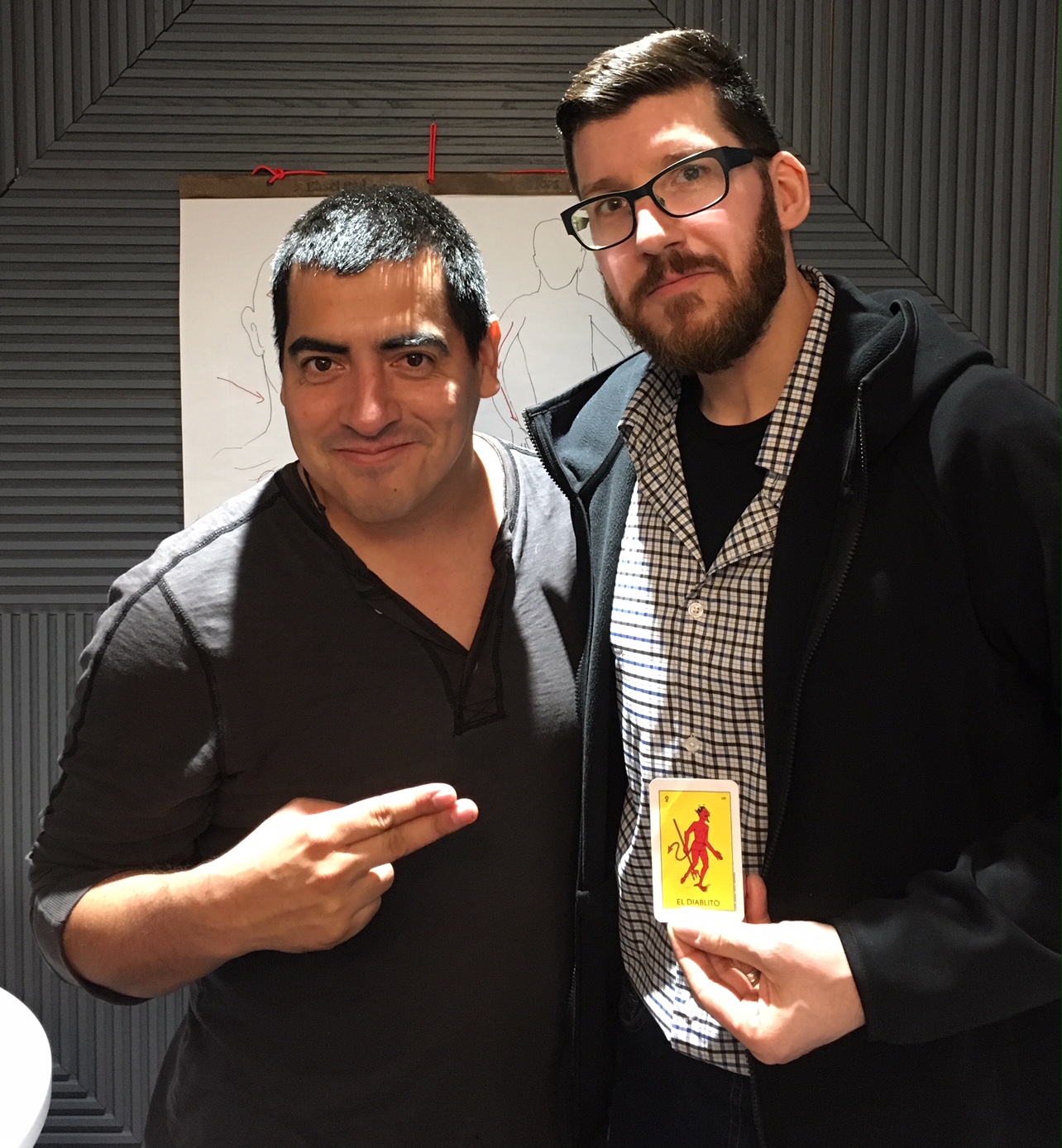
Ed and I. At the end of the weekend we were given the opportunity to choose a card. I asked for Ed to choose. This is what I got. “El Diablito”.  Very humbled.  Thank you.

***IF/WHEN WE HAVE A DATE, WE WILL POST IT IMMEDIATELY HERE ON THE BLOG AND ON OUR SOCIAL MEDIA*** (Give us a follow so you don’t miss out!)

I am very happy to have gone and would recommend attending a seminar from Ed if you are able.  The training was excellent and the information covered was wide and relevant.  If you live in the Washington, DC area, do check out Ben and DC Combatives as the types of violence mitigation methodologies he teaches are grounded in reality and effective.  If he was in Toronto, I’d certainly train there.

Thank you to both Ed Calderon and Ben Drader for having me as the lone Canadian at the training seminar.

For further information about the topics and training seminars covered here, see the links below:

Till next time, stay safe and stay crafty.
Posted on 2 Comments

Tactikey Review

Low-pro force multiplier.

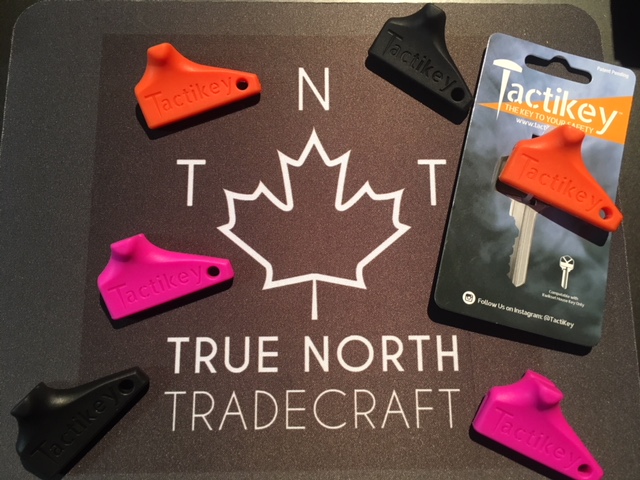
I recently discovered a new self-defence product – Tactikey.

Tactikey is an upgrade on an old-school, low-tech means of self-defence.  The old “punch them with your keys” technique, except with some modern upgrades.

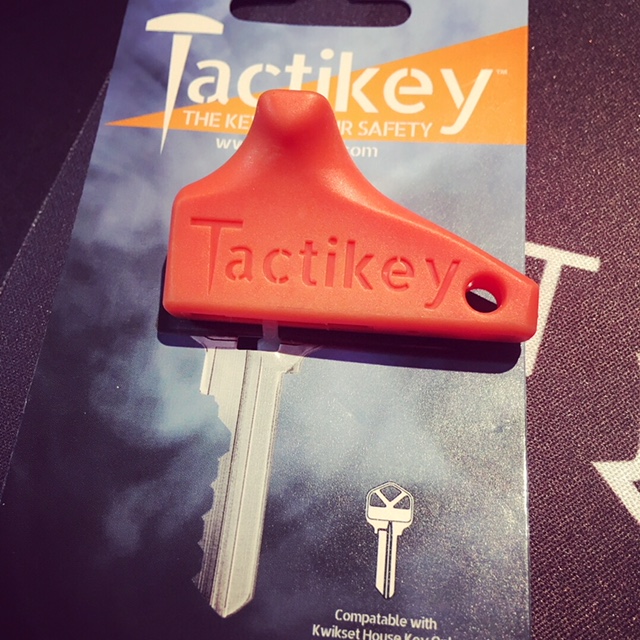
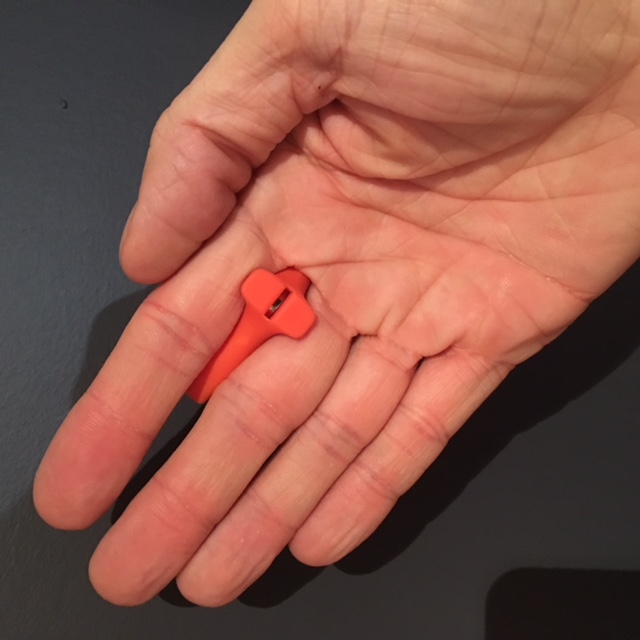
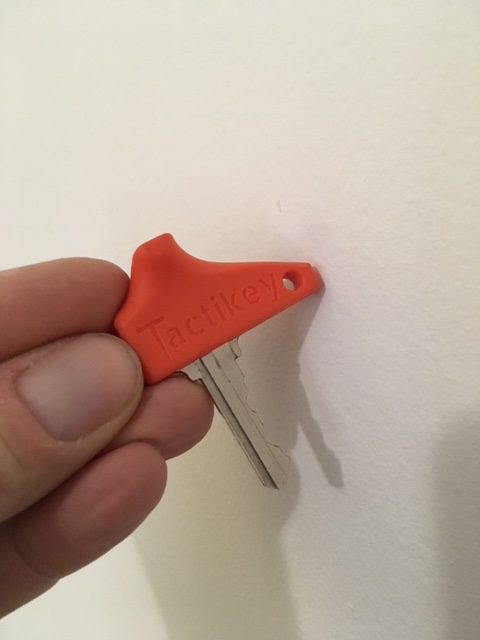
The product itself is a small (1 x 1.75 x 0.5 in), lightweight (6.5 g) and strong (TPE 110 Composite material) designed to ergonomically accept a standard Kwikset house key and give it a platform to use as an impact weapon.  This design is helpful in reducing injury to the defender’s hand while allowing the transference of force through the key point to the assailant’s soft tissues.

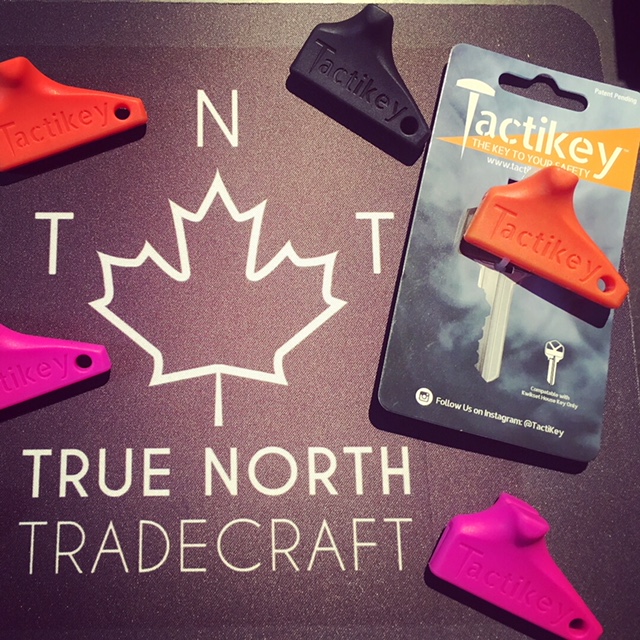
Tactikey in it’s packaging (front).
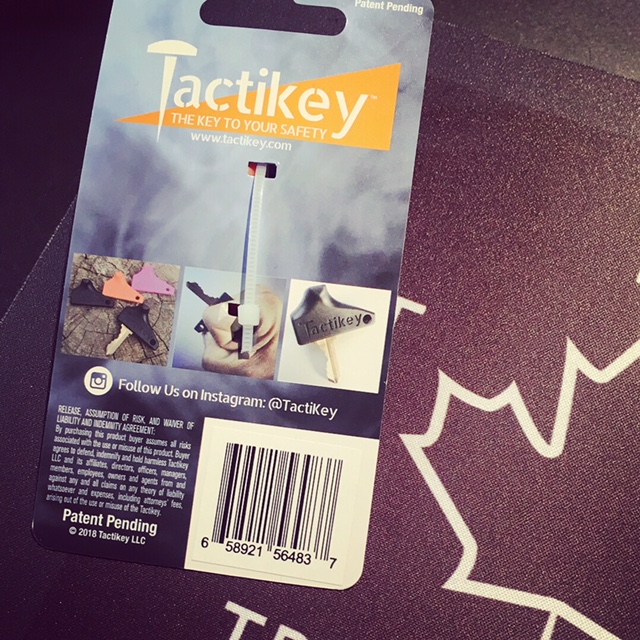
Tactikey packaging (back).

The combination of supporting grip and solid metal point is surprisingly effective and protects the user from injury well, unlike an un-shrouded key being used for the same thing.

Low-pro force multiplier.

When I received my package of a few Tactikeys and was caught by several positive things:

  • VERY light
  • VERY small
  • VERY easy to add to your key ring
  • Usable in non-permissive environments and will likely not raise any red flags if inspected by authorities
  • Allow the key to be used for it’s intended function AND as a self-defence implement and;
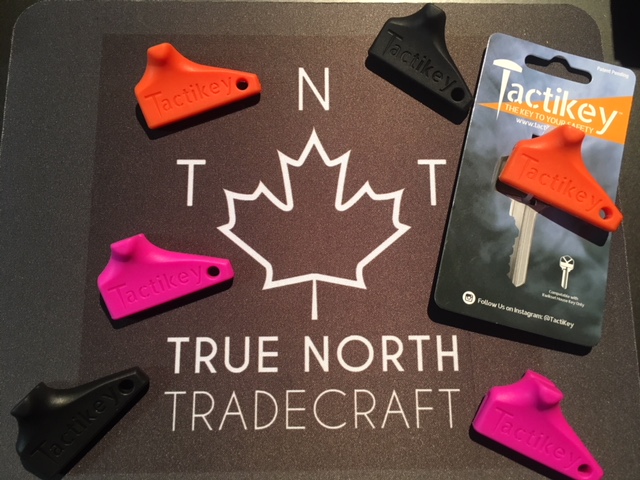
  • Comes in your choice of Blaze Orange, Hot Pink or Carbon Black.
  • Inexpensive (as of this writing – going for $9.99 ea with free US Shipping)
  • Full details from website available here.

Along with the personalized note from them, I immediately equipped my Tactikey and went to work playing around with it.

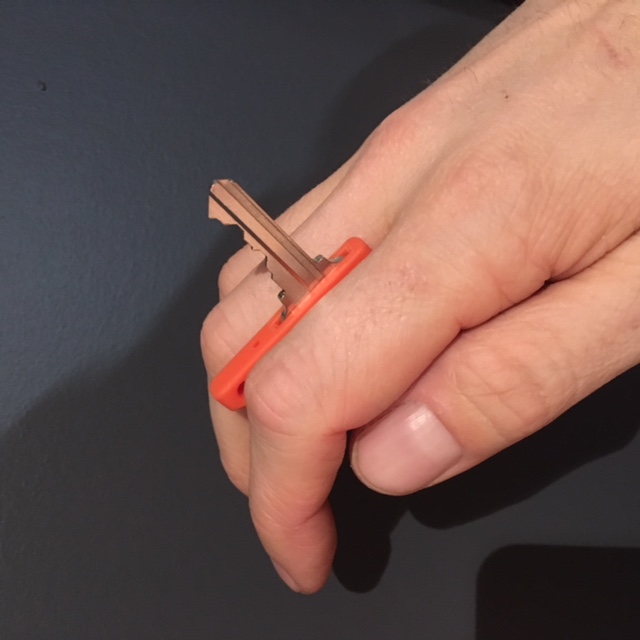
I found that holding it was comfortable.  The finish on the grip was soft and smooth but didn’t slip.

Ergonomic and secure grip.
Fits well into the hand.

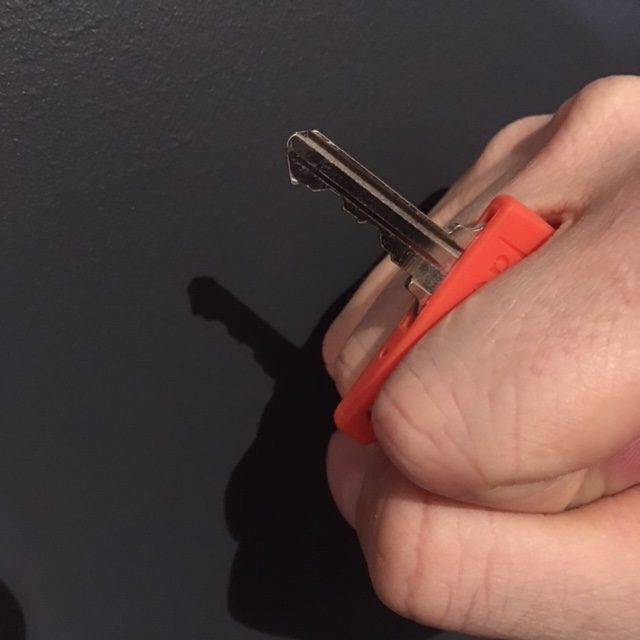
It intuitively holds well between the fingers and stays solid when striking.

Pointy, ouchy and very solidly held.

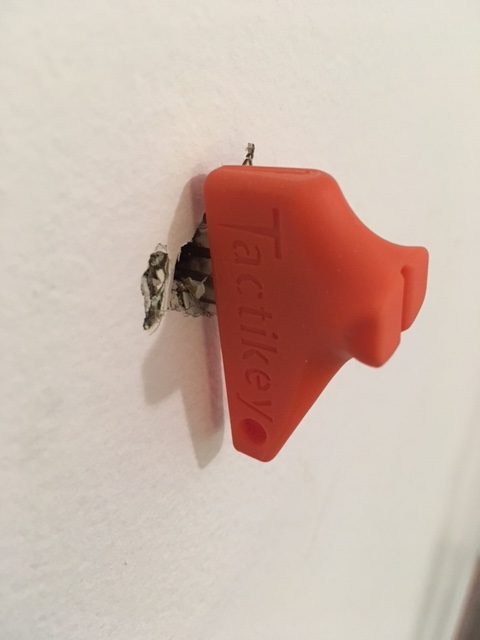
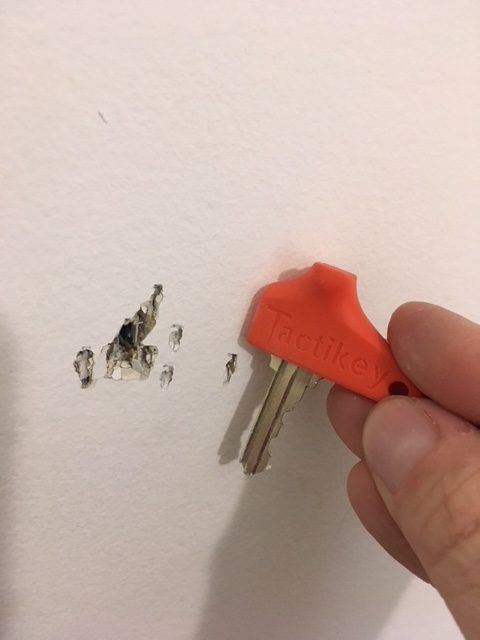
I had access to a building site where walls were being replaced and took a few jabs at drywall and lathe & plaster.  The results were good (see below).

Drywall – before.

I was able to make holes in both mediums without pain or injury to my hand.  The regular (un-sharpened key) penetrated both types of walls with relative ease making me feel confident that it could cause trauma to soft tissue on a hostile human target.

Through drywall with first strike.
Repeated strikes had no issue with penetration.

As it is a simple piece of plastic, Tactikey can go anywhere a set of keys can go and will always be ready as an added force multiplier if you should need it.  I have added this to my Every Day Carry (EDC) as it is useful, lightweight, practical and effective.  Along with the other items I carry, I feel it is a wise investment and doesn’t add bulk of weight to your setup.

Although I haven’t had the opportunity to hit a person with it at this point, I’ll be sure to update this post with those results, should they occur.  That said, punching holes in drywall happened very easily and I wouldn’t want to be on the receiving end of a hit with one of these.

Tactikey also has a fantastic return policy on it’s product (from their website):

“30 Day 110% Return Policy – Purchase with Confidence.
We at Tactikey work tirelessly to develop the world’s most unique and efficient EDC products that will help you achieve well-being and safety. We believe in our products so much that we stand behind them with a no hassle, no questions asked, satisfaction guarantee 110% return policy. If you purchase any Tactikey product on our website Tactikey.com and you are not satisfied, return it within 30 days for a 110% refund. The guarantee is applicable to all purchases made from Tacktikey.com only and does not cover Tacktikey retailers. Retail purchases will be handled by the particular retail store’s return policy. That is our commitment at Tactikey to you our customers.”

Instructions on the use of Tactikey can also be found on their website here.

The one and only downside with Tactikey is that it is only compatible with Kwikset key blanks at the moment.  If your house key or other keys on your ring are not of this kind, they may not fit properly.  That said, Tactikey is working on different formats for several other major key manufacturers (like Schlage and Yale) and customers will be able to choose which works for them.  In the grand scheme, this isn’t a big deal.  They will come out with others soon and, really, I’d sooner have a dedicated defensive key (a blank, sharpened) than my primary house key.  If you do hit something or someone and bend it, you may have issues using your key after.  Not to mention if you lose it in a fight, buddy will have your house key.  I’d sooner have a non-key.  I used an old, out of commission Kwikset key I had laying around for my test & carry key to ensure that doesn’t happen.  I will pick up a Kwikset blank and sharpen it with a file for primary EDC use in the coming days to ensure I have it the way I want it.  You can pick up a Kwikset blank from anywhere that cuts keys (Home Depot, local hardware stores, shoe repair places, etc) and just ask them for one.  Again, not a big deal right now as you’re best off to go with a dedicated key or key blank for this particular use.

Have a look at their website, check them out on social media and feel free to pick one up for yourself and maybe some family members.  For the money, I thinks it’s a great deal and you get something solid and useful.  I really like it and I bet you will too.

Till next time, stay safe and stay crafty.

Posted on

Training Review: Behavioural Profiling and Situational Awareness from Emergence LLC

Emergence LLC – http://www.emergencedisrupt.com

Recently I completed the Behavioural Profiling and Situational Awareness online course produced by Emergence LLC and presented by Yousef Badou.

Mr. Badou is a US Marine veteran (with 3 tours in Iraq) who contributed to the development of the behavioural profiling programme used by the USMC.

As an introduction, I thought it was a concise overview of the principles of behavioural profiling and situational awareness.

Developing awareness of the Baseline.

A lot is covered in the ~1 hour online course (especially for the cost, at $9 USD).  For someone new to it, it really opens up a window into the world that your senses disregard if you’re not in tune to your environment.  For the practitioner, it is a good review from the ground up of basics, reframed from another perspective.  He states that if he can, through imparting his knowledge, give you even an extra second (or more) of advantage to act, he will have given you an edge in surviving an event.  This is all predicated upon becoming in-tune with the environment around you and feeling the baseline.

Seeing what stands out even when it’s not obvious can give you that extra second to act and increase your chances of survival.

Mr. Badou’s examples and delivery are engaging and spot-on.  Such as the  recognition of “pre-incident indicators” are all learnable and actionable.  Though a large portion of the material he covered was a review to me, I did like the way he explained some things I hadn’t heard before – the concept of “File Folders”, for instance and how they affect one’s decision making processes.

Seeing the threat early is like seeing in the future.

The entire overview hit the salient points while providing easily understandable context for each.  Broad topics covered are:

  • Introduction to Behavioural Profiling (with physiology and psychology backgrounders)
  • File Folders and Denial (as well as anomalies and perception)
  • Fear and Brain Errors (including the Limbic system), and;
  • Final Thoughts

Mr. Badou references a few different additional sources for further reading in the form of Patrick Van Horne’s Left of Bang, Gavin De Becker’s The Gift of Fear and Dave Grossman’s On Combat – all excellent primary sources for this type of material.

I recommend giving Emergence LLC a look and trying out their introductory offering.  I am also looking forward to further modules they will be putting out – such as Observable Behaviours and Behavioural Indicators.

Till next time, stay warm, stay safe and stay crafty.

Posted on

Delta 2 Alpha – The Accent Series

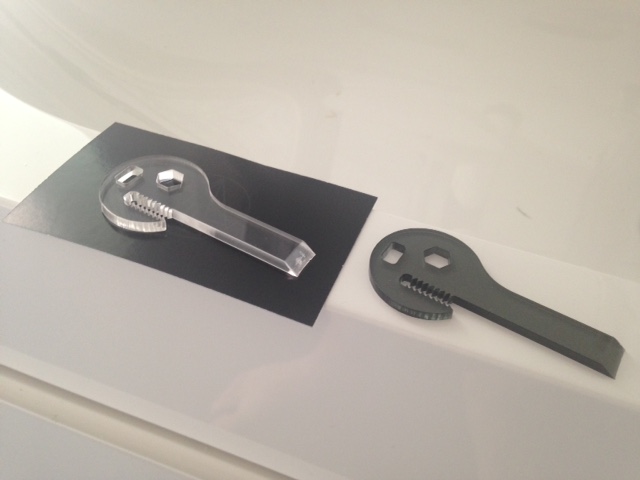
The Accent Series.

By Delta 2 Alpha Design

The Accent Series. Delta 2 Alpha Design.

A little while ago I received a mail call containing a sample of the Accent Series from Delta2Alpha Design.  To read my review of the previous generation of tools, go here.

Happiness in a parcel!

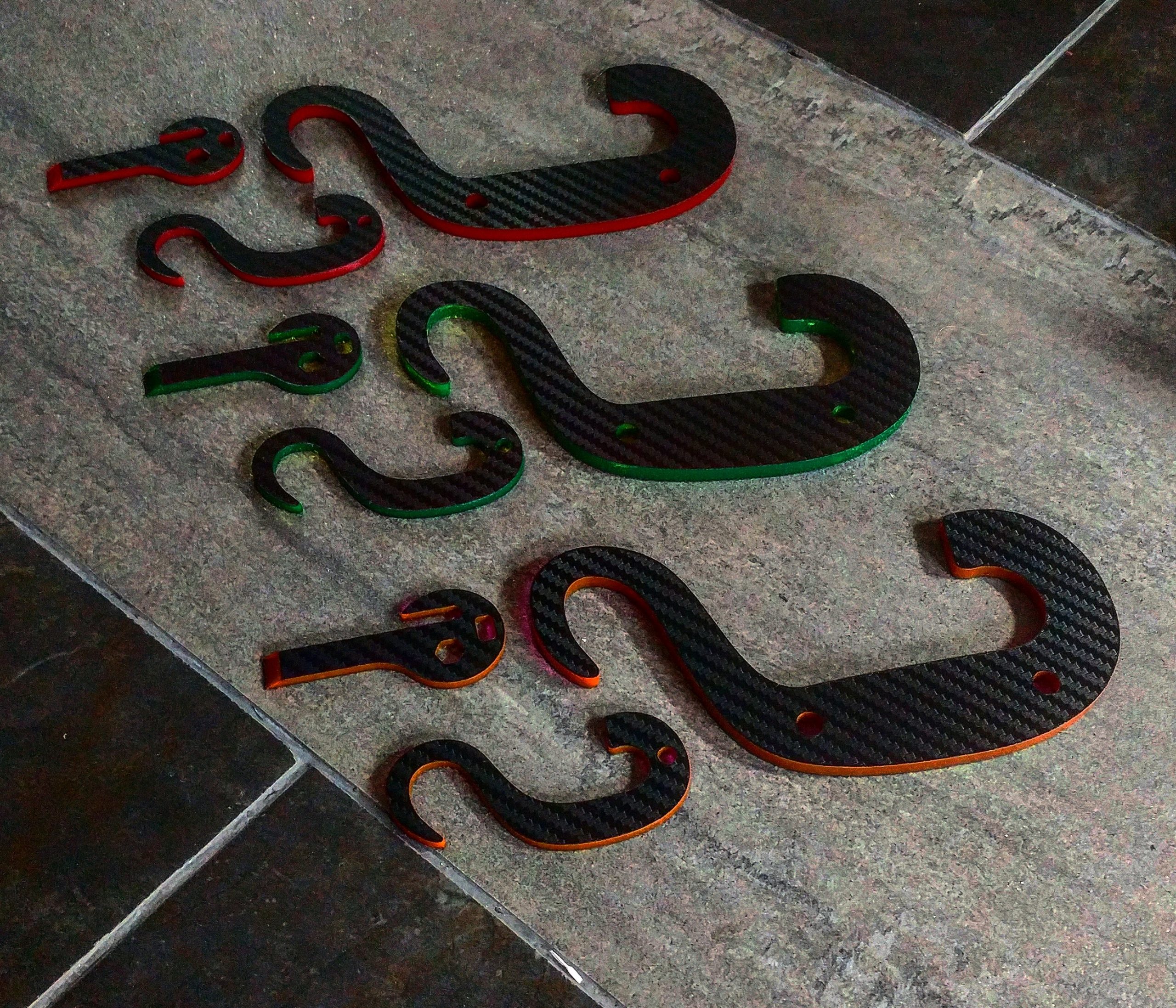
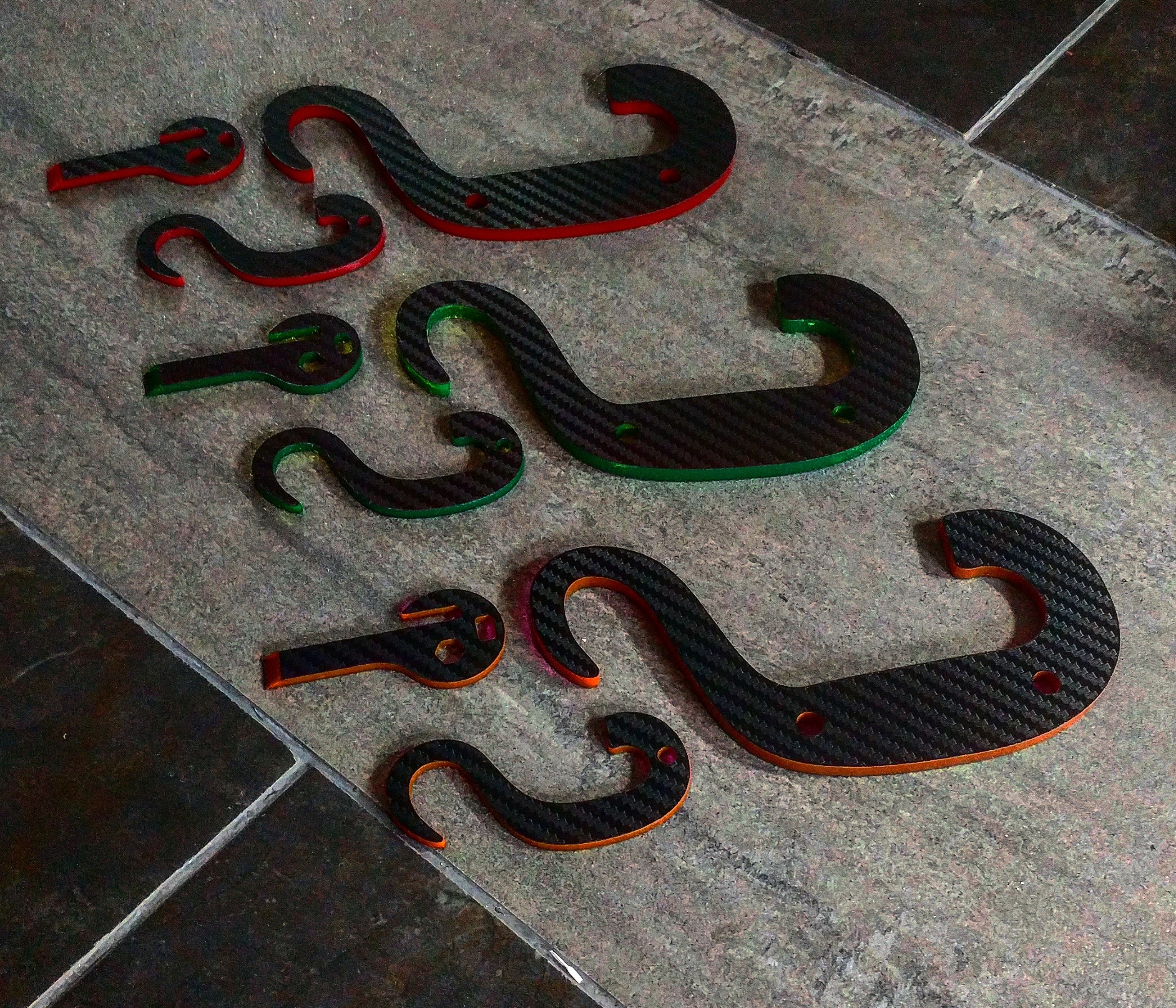
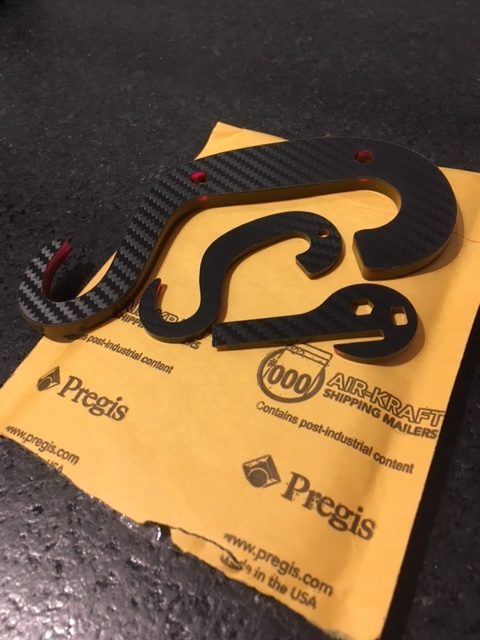
The Accent Series is their newest offering of upgraded versions of The MARK, The LOLLY and The MiK.

The MARK, in colours…

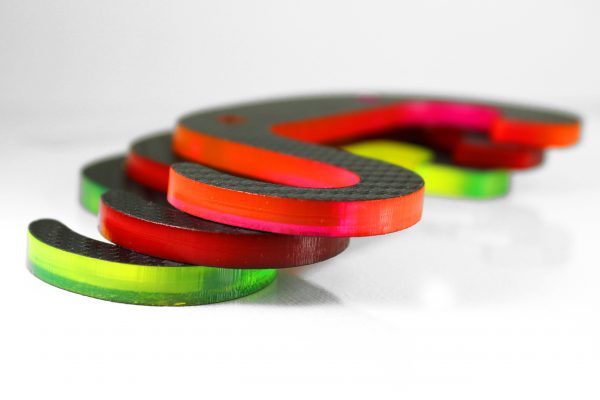
The new tools are delivered in three colours (crimson, blaze orange or day-glow green), clad in a robust carbon fibre skin.

Durable polymer clad in carbon fibre.

They are all incredibly versatile and even more durable than their previous versions.  I found the carbon fibre skin to be more resistant to scratches and abrasions than the earlier version of polymer tools.

The Lolly – polymer last-ditch tool. Earlier version.
Accent version of the Lolly.
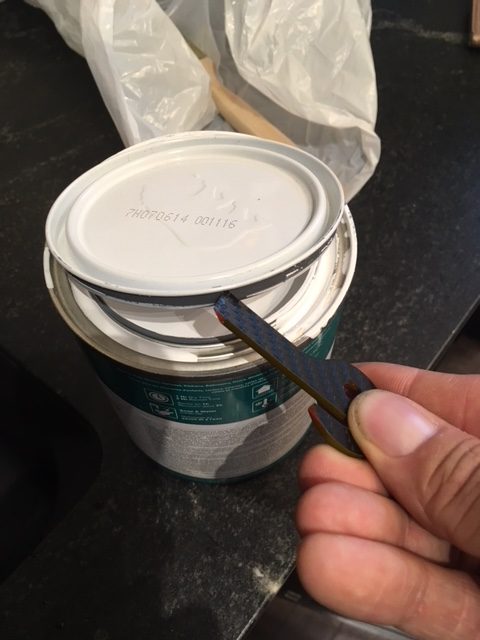
I have used the Lolly for opening paint cans when I find myself without a screwdriver. It’s handy to carry in my 5th jeans pocket.

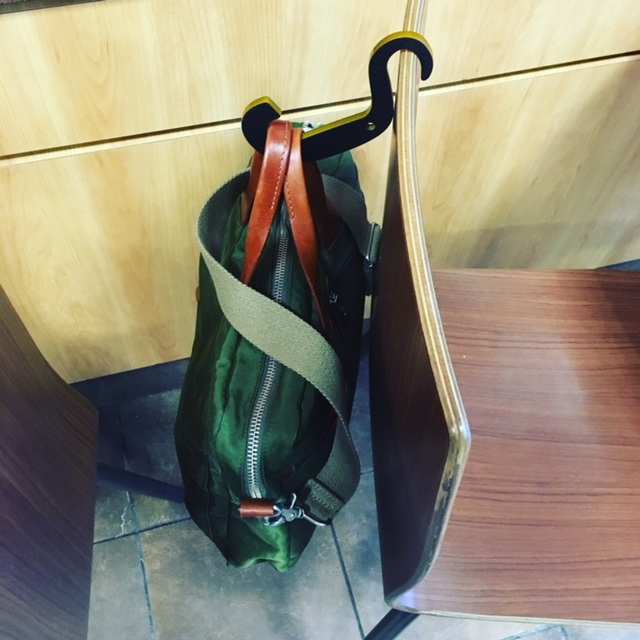
On a recent visit to Ottawa, I found myself in a Tim Hortons for a morning coffee.  The floor was covered in melt and slushy runoff from the recent snow.  Thankfully, I had my Accent Series MARK in my bag (perfect for non-permissive environments like government buildings) and ensured my bag and its contents were well out of he muck.

No dirty, wet Tim Hortons floor for me and my stuff!

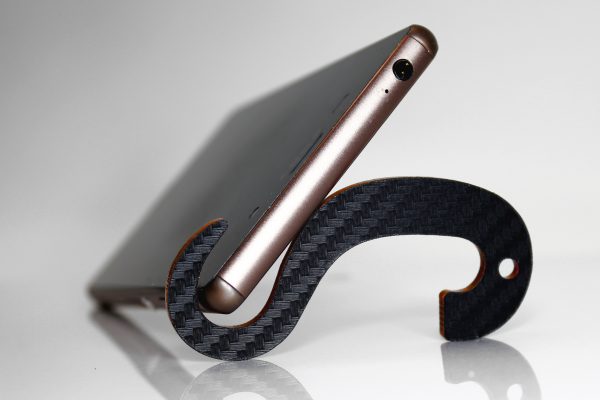
The MiK can be used as the MARK can, but with smaller applications.  I do like how it can hold up your phone, hang your bag (or purse) or coat – perfect for bathrooms.  It can also easily fit into the fifth pocket of your jeans for concealment and easy access.

The MiK. Small but sturdy.


From the Delta 2 Alpha website:

TheMARK: Offers a convenient way to keep your jacket or bag off of the floor bathrooms when traveling (or everyday life) when there isn’t a hook. It can also be used as a tablet stand.

TheMiK Fits conveniently on your keys, and is used a hands free way to prop up your phone. This comes in handy whether you are trying to do a video chat, or just kill sometime watching cat videos (No Judgement).

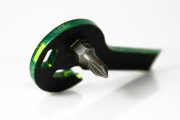
TheLolly: Can go right next to TheMiK on your keychain. TheLolly is a light duty pocket scraper, and prybar. It has be referred to as a “Fingernail Saver”. It also offers a ¼” bit driver and the key ring slot can be used to drive the Leatherman multi-tool brand bits.

*Each package includes one (1) of TheMARKTheMiK, and TheLolly; They are sold as matched sets*

All things considered, I feel that Delta 2 Alpha scored a big win with improving an already-sturdy and reliable design with their Accent Series of polymer tools.  I’m very happy with them and equip myself with at least one on a daily basis as they are lightweight, practical and come in handy in a variety of ways.

You can order yours here on their website.

Till next time, stay crafty.
Posted on

Beard Products for Bearded Operators

Fine beard products.

Beard Products for Bearded Operators

I’ve always had a hard time taming the wild in my beard.  I’ve tried, for many years, to find a product that does the following:

  • moisturizes
  • makes the hair softer and more manageable
  • adds a healthy shine
  • has an appealing scent
  • is easy to use and travel with (no strange looking creams and goos)
  • is produced locally (best option) or ethically abroad
  • and isn’t ridiculously expensive.

Over these past many months, I have made an effort to try several options that I would hope meet these criteria and would do what I’m looking for.

First off, my beard is a thick wire brush with swirls.  This makes the dynamics of beard maintenance difficult from the start.

I used a few creams starting off to moisturize the beard, but found these mostly ineffective.

I next moved to lotions.  I tried a decent product (from Comrades Barber Shop) and it was alright, but not fantastic.  I think the product itself is decent, but I feel that it doest penetrate my beard quickly enough and bring softness throughout the day.  This is just how my beard worked with it.

After those, I have landed on beard oil.  For my beard, it seems to be the best choice.

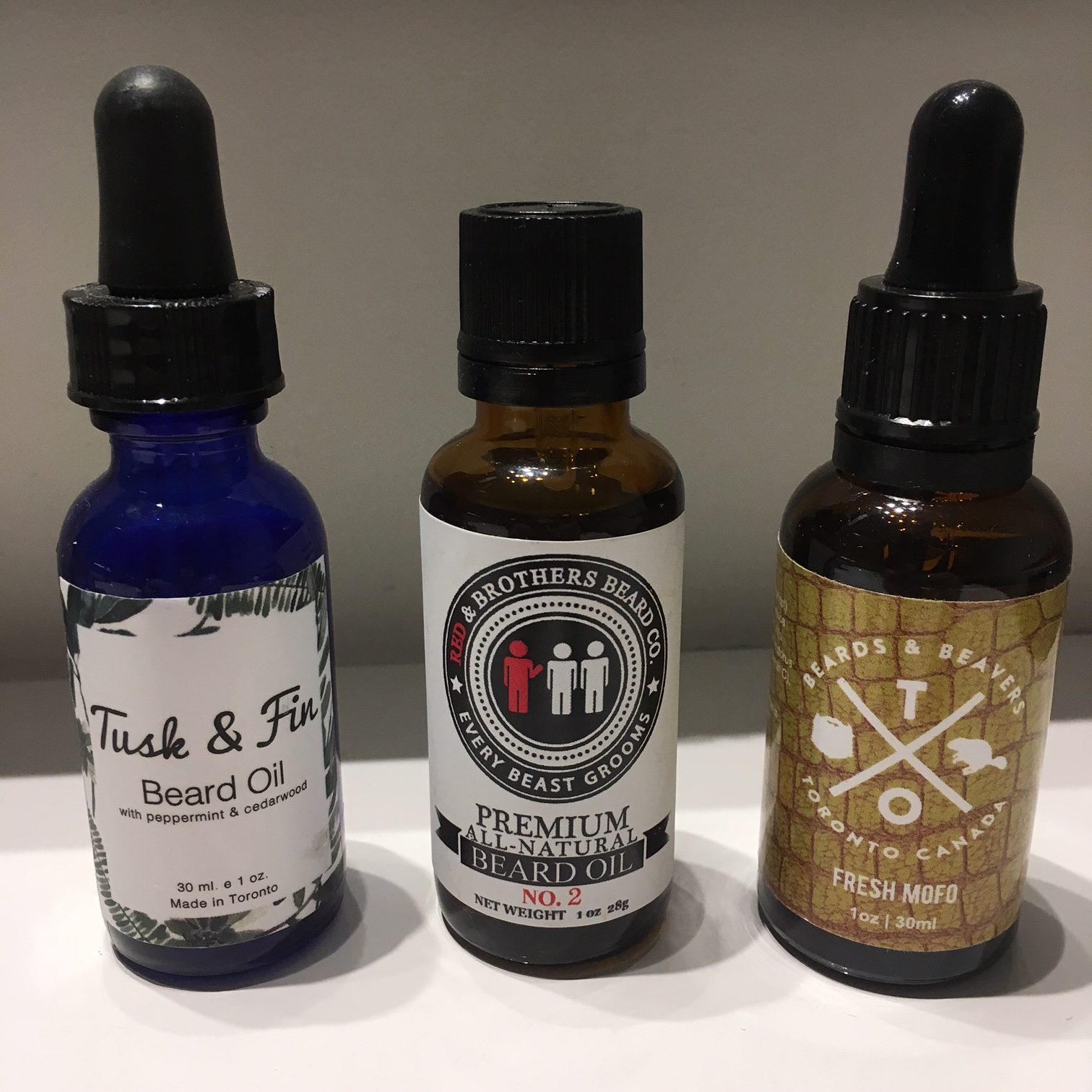
There have been 3 brands I’ve tried in this recent run that I have liked.

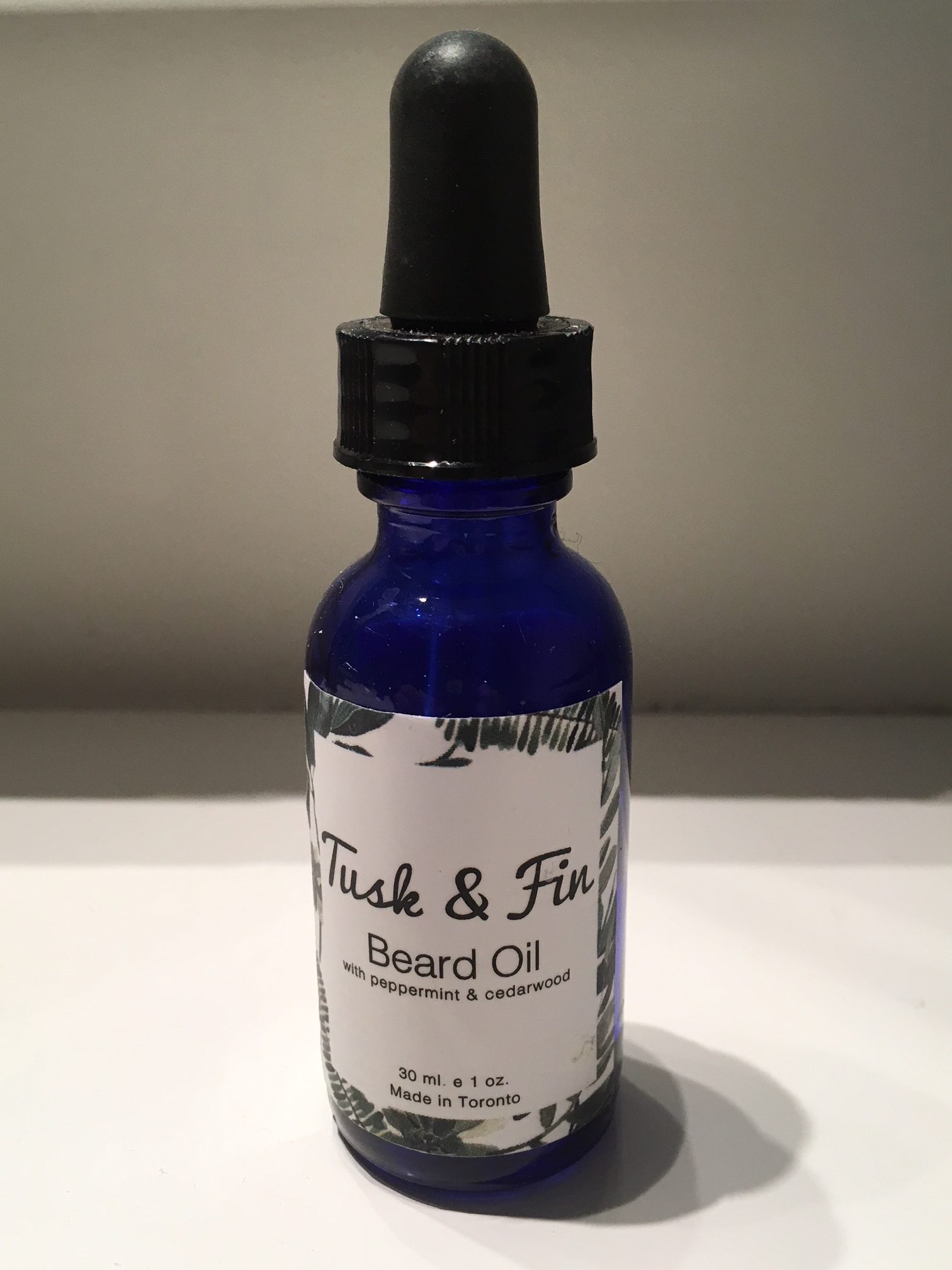
The first of these, Tusk & Fin (see this link for more info) , was bought at the Village Juicery on College St. in downtown Toronto.

Tusk and Fin beard oil.

It comes in a nice, small glass bottle with a dropper.  The scent is a mix of menthol and lavender.  Quite nice, actually.  The oil itself is of a higher viscosity (which is nice) and is readily absorbed.  The result meets expectations on all the levels, but is a bit on the pricey side ($30 a bottle) but lasts well under daily use and seals well.

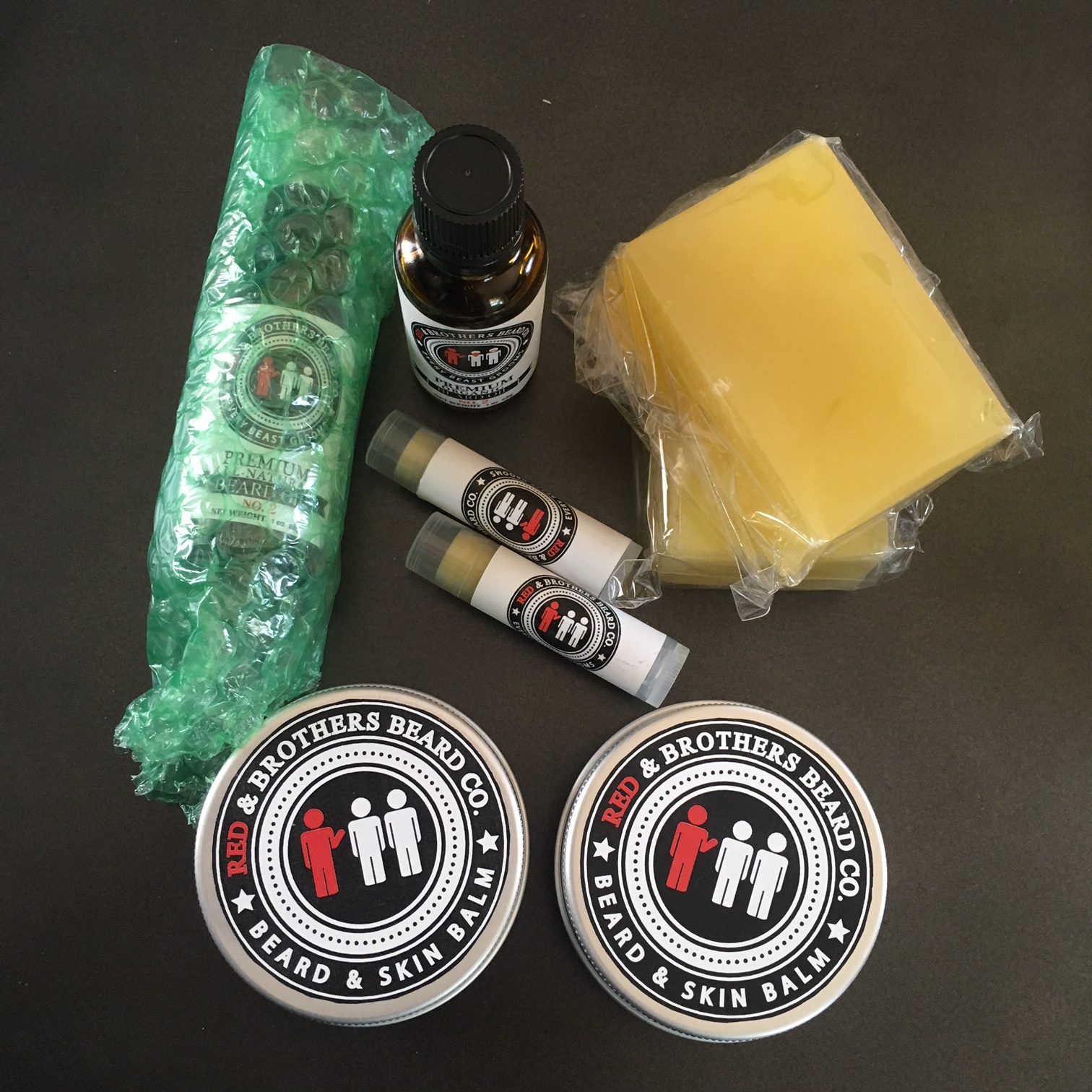
Second, is Red & Brothers Beard Company.   They are a new Canadian company and despite their initial difficulty with communications (they had some technical problems with their messaging system when I was trying to place my order – now fixed) they quickly addressed it, connected with me directly and took care of it.  I was very happy with the service I received and ordered a bunch of their stuff to try out.

Great shipment in from Red & Bros.

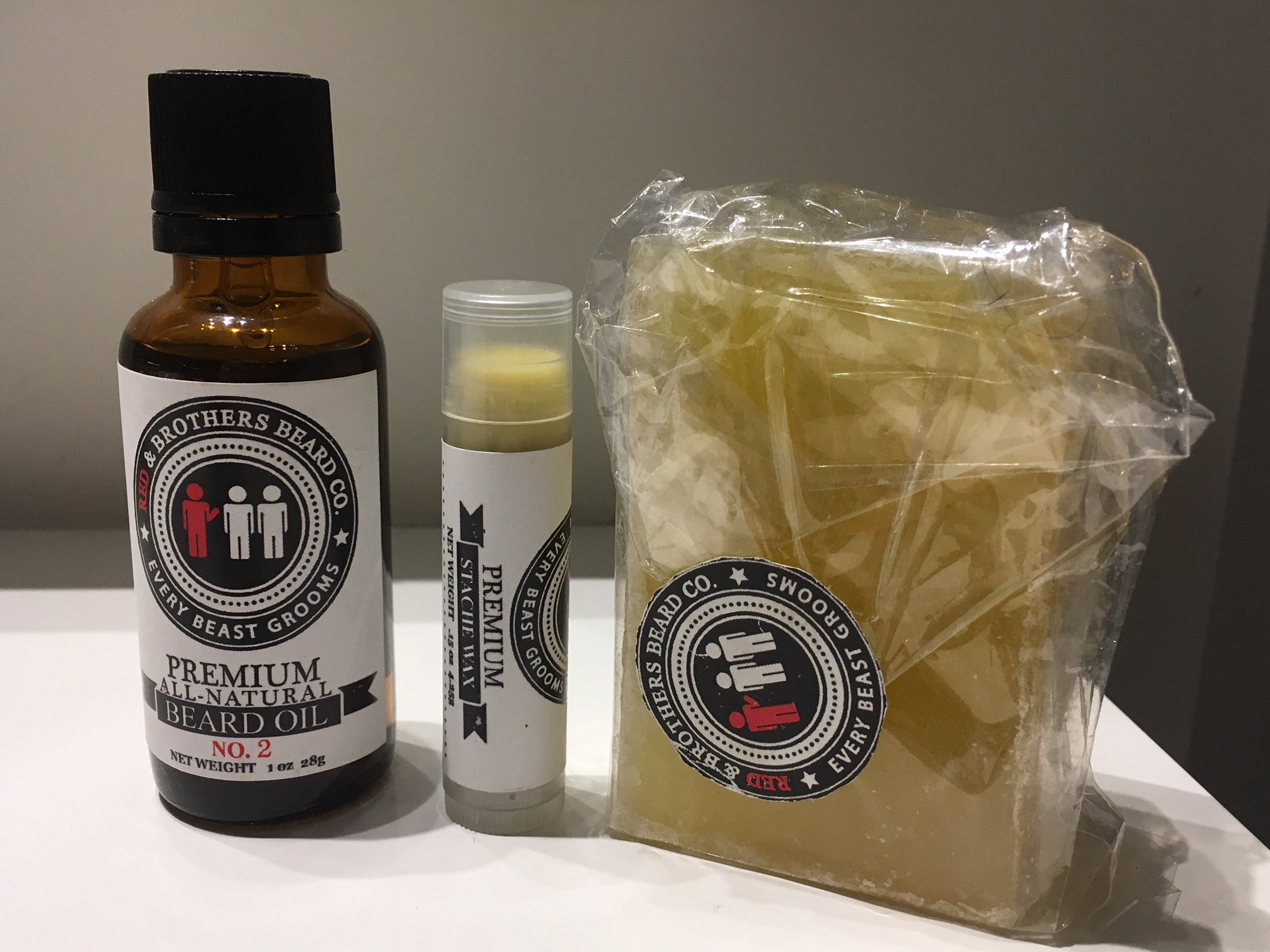
Their beard balm was good for sculpting, but for my beard, which has difficult swirls, it didn’t work for me.  Their “moustache stick” (like Chapstick for your moustache) works pretty well for taming wild fliers) and is small and handy.  The beard bar, a soap bar for your beard which doesn’t strip away the oils from your man-mane, also works very well for morning and evening face washing.

The main product, their beard oil, is really nice.  I find it to be the right amount of everything.  Viscosity, scent, effect on the beard, price ($ per bottle) and it’s also a new Canadian company from the Ottawa area.  I like to support Canadian whenever I can.  That said, I have one big issue with Red & Bros beard oil.

Beard oil, moustache stick and beard bar.

The bottle.  More specifically, the cap and dropper insert.  Once opened, I found that screwing the cap back on doesn’t seal very well and can leak.  (This may be this specific bottle but I’ll only know when I open the next one).  Also, the drop insert (not a medicine-dropper style like the others) takes forever to get even a few drops of oil out of the bottle.  I grabbed a needle-nose plier and pulled it out because it was too frustrating.  I’ve emailed them about it as they were so good in their communication with me so if it’s a manufacturing issue, and they address it, it’d really be a great product all-round.

Beard balm. Very nice product but a little too involved to use for me.

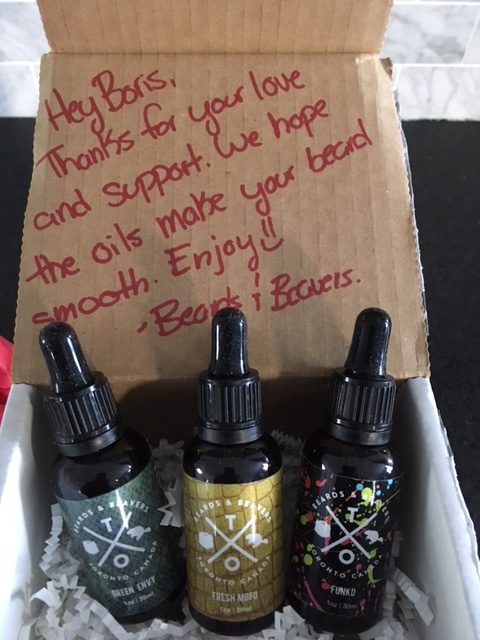
Third, I’ve come across Beards and Beavers.  They are a Toronto-based company and their products are interestingly marketed.  For the cost ($50/3 bottles = $16.67 ea) they are a good deal.  The dropper-tops are user-friendly and the scents work well for me.  The formulation of oil and other ingredients make my beard smooth, soft and feel great.  The customer service is great too.

Great product. Great value. Personalized message. Cool.

I had a technical issue placing my order and after contacting them, I received a reply thanking me for bringing it to their attention and that it had been fixed.   I immediately placed my order and it arrived quickly with a really nice, personalized note in the box thanking me for my purchase.  I chose “Fresh Mofo” and “Green Envy” for my scents and they threw in “Funk’d” as the third surprise scent.

Cool Stamp.
Made in Canada. Nice.

I’m happy with how they smell and how they make my beard much more manageable.

In all, I’m an adherent to beard oil for beard maintenance over the lotions, potions, creams or what have you.  Though it is very much a subjective and personal preference depending on what works best for your particular beard, I would recommend taking a look at Tusk & Fin, Red & Bros and Beards and Beavers for your beard care needs.  They are all great products and work well to meet the six points listed at the beginning.  Check them out.

Buy Canadian and find something to maintain your operator man-mane.

Contributing factors to a well-managed beard.

Stay crafty & keep looking (and being) dangerous.

Posted on

Persec Aware- A solid option for a custom belt, handmade in Canada.

A solid piece of kit, made in Toronto.

For years, I’ve been on the lookout for a solid belt.  When I say solid,  I include in that definition fit, style, strength, durability, functionality and dependability.  Almost two months ago, I think I hit pay dirt with that.
While I was planning my Bruce Trail outing, (read about it here) I found that I was missing a key piece of gear: a “solid” belt.  Sure, there are a load of well-known commercial companies that offer quality belts, but I was looking for something specific.  I wanted what they offer, something I considered “solid”, not ridiculously over-priced and, if possible, Canadian-made.

Enter Persec.  We had followed each other on Instagram and I reached out asking some questions about their products, their hardware, colours and the like.  Not only was I happy with the answers, but also the questions I was asked.  Custom work, apparently, is even better when the one making the product has a better understanding of the customer’s intentions and requirements.

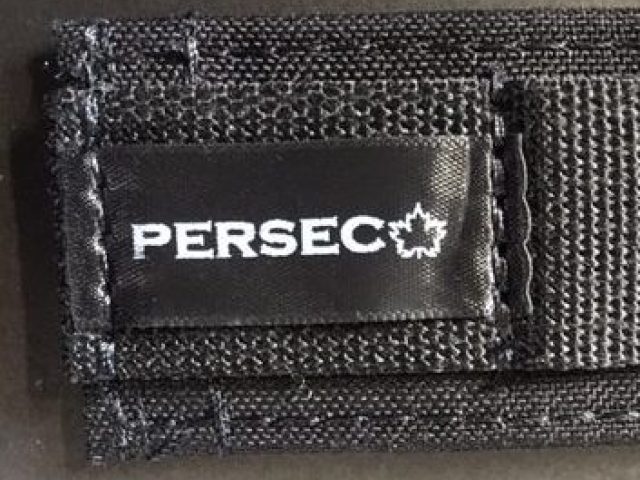
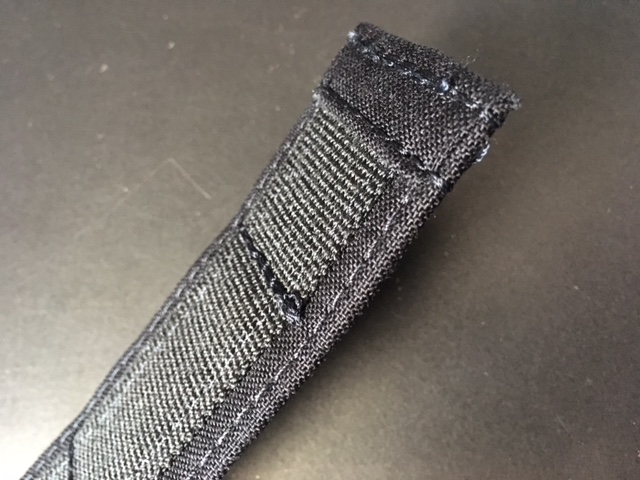
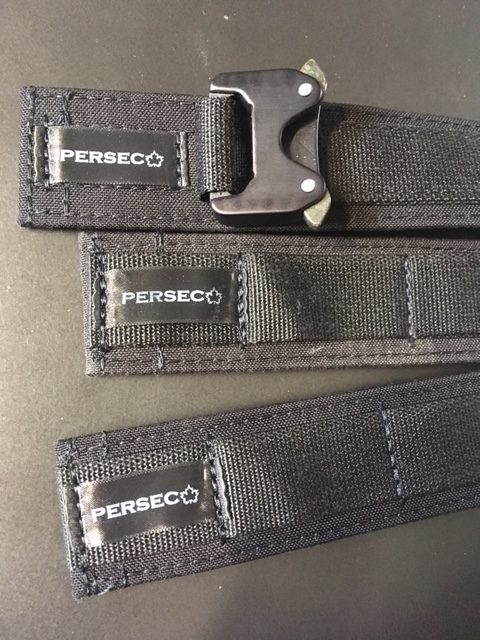
Extra stitching, clean and tight cuts. Quality materials.

Some fast-facts about the belts offered by Persec:

  • They offer 3 widths – 1.5″, 1.75″ and 2″
  • Several colours (black, ODG, camp, coyote, etc)
  • Built from a combination of high-strength webbing and Codura for rigidity
  • Available in a variety of stiffnesses, strengths;
  • All are custom-lengths;
  • Every belt is made by hand, in Toronto, Canada, and with incredible attention to detail that is immediately apparent.
  • All manner of customization is available – contact them directly for more details.
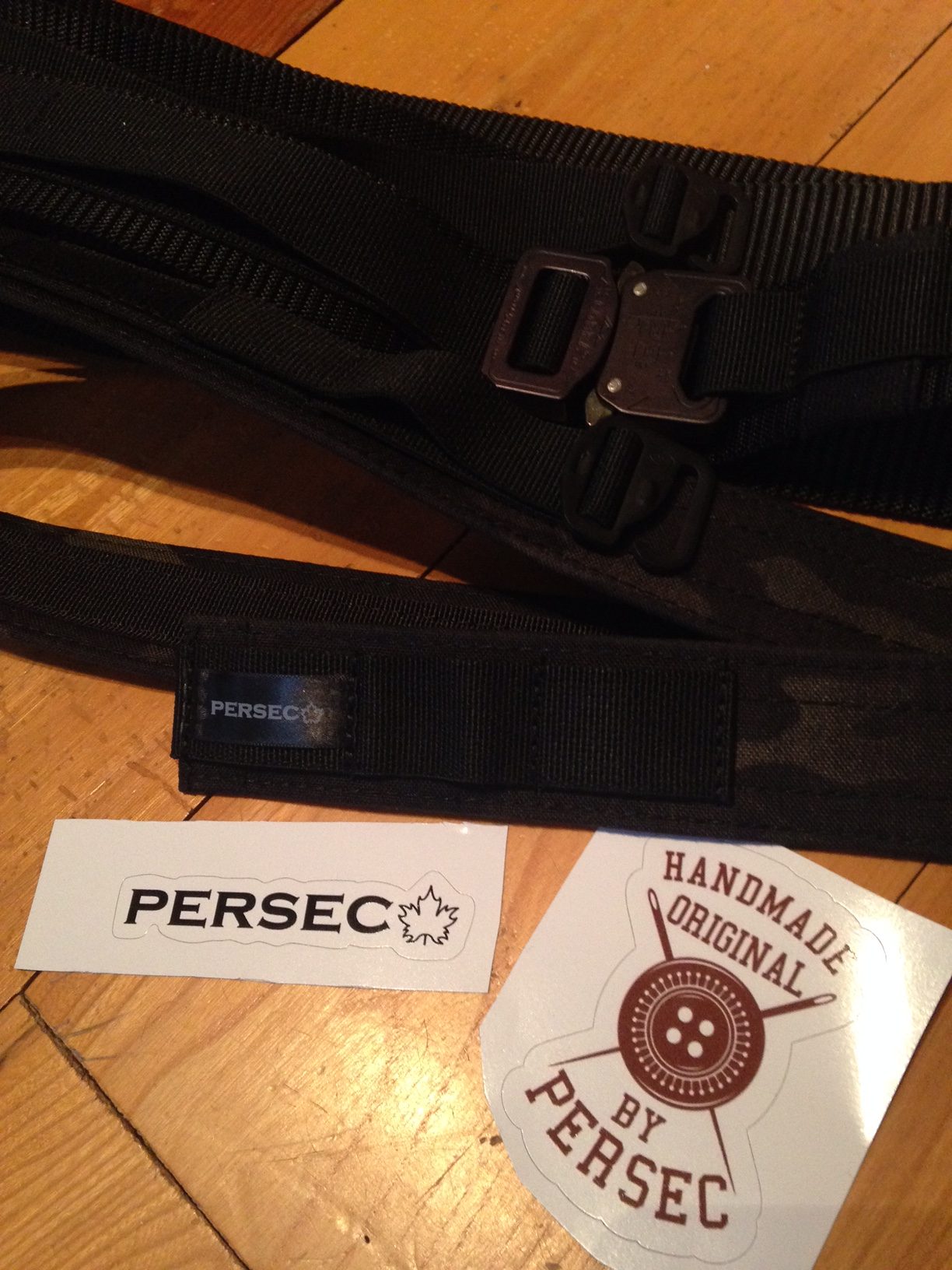
Like a belt-Christmas!

As I received my order of belts, I was immediately relieved with my decision to go with Persec and try them out.

The belts were custom-sized.  Exactly what I had requested.  The shipping was very fast (they are located in Toronto).  When I held them, I could feel the quality of construction in the materials but also, when examining them closely, could tell the attention to detail in the craftsmanship.  Most consumer goods made in bulk have loose stitching, imperfect cuts and the like, but not these.  Every detail was exacting.  I was impressed.

What I had requested was a belt which would cross-over easily from the trail to the urban jungle, in black, with semi-rigidity, custom-length, with both buckle options (hook and Cobra Buckle, respectively).  Persec did not disappoint.

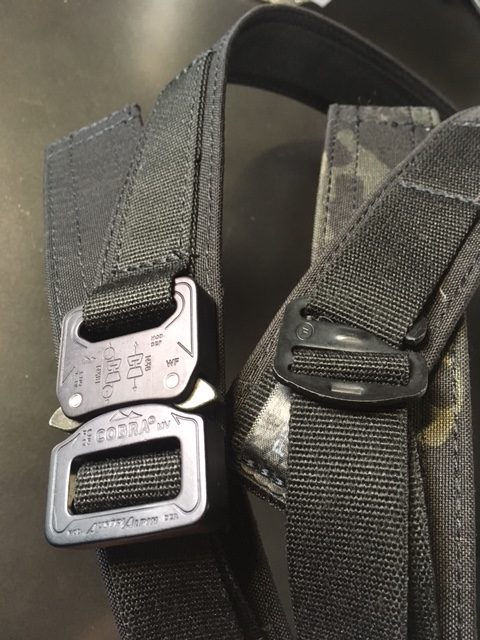
The Cobra buckle (left) and hook buckle (right) options on Persec belts.

The semi-rigidity of the belts, as well as the widths (they recommended 1.5″ as opposed to 1.75″ as I was interested in the cross-comparability of daily wear as well.  The 1.75″ would be more appropriate for a duty or gun belt setup).  I was happy for the choice as it easily works with jeans as well as hiking or tactical pants.

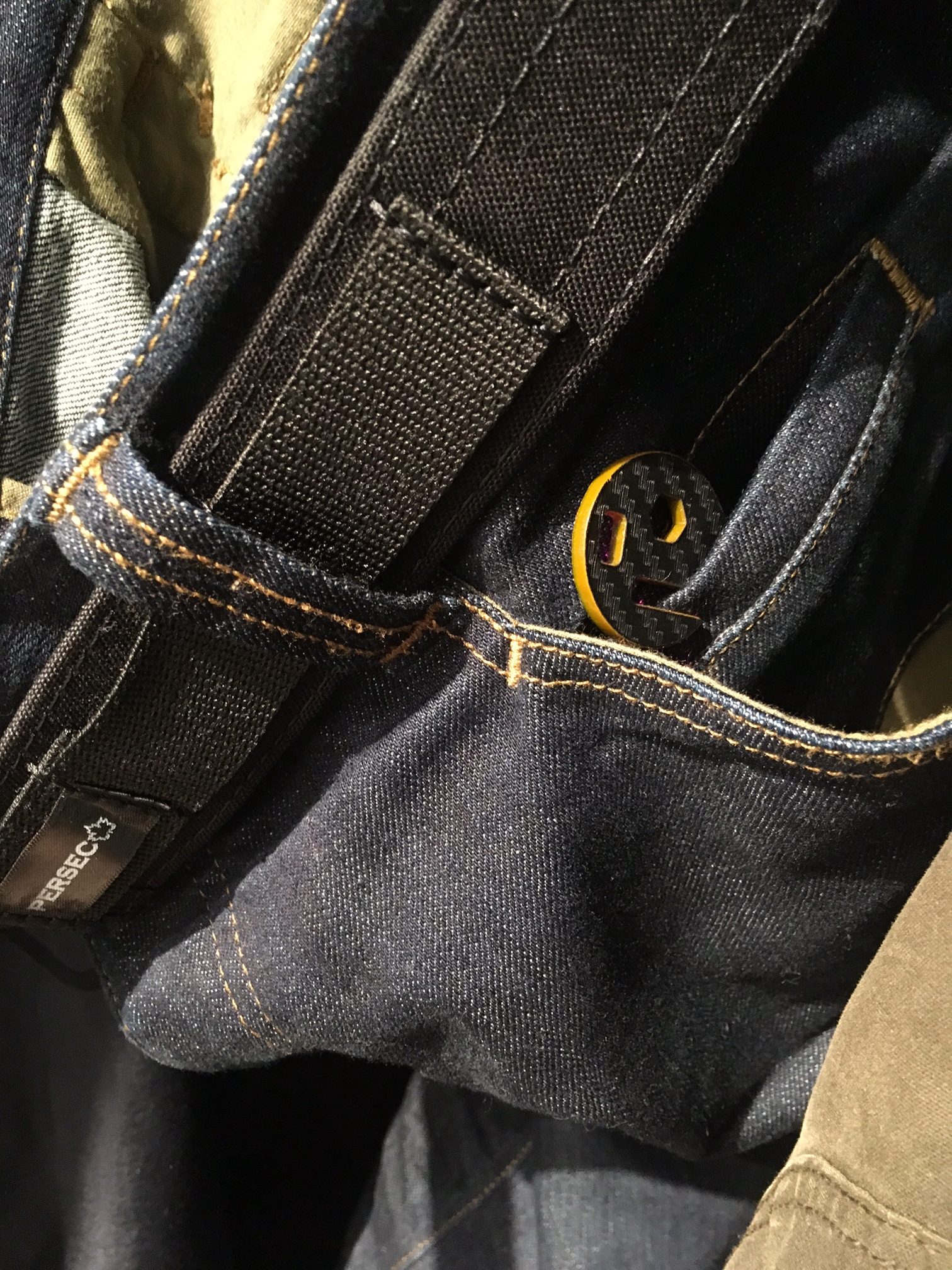
Persec belt works well as a daily wear belt in the urban wilderness as well as on the trail.  Also, the Lolly in my pocket (from Delta2Alpha’s Accent Series) compliments the belt in more ways than one.

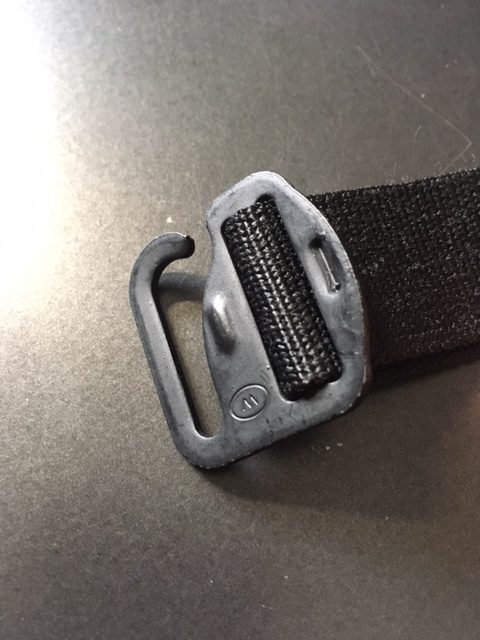
The adjustment options for the belts work very well.  The hook buckles have three attachment points which, in harmony with the velcro hook & loop patch on the opposite side, allow for a perfect fit every time.  With the Cobra buckle, you have only the velcro strip opposite the buckle, but this too works very well as the cam cinched down reliably.
Hook buckle. Once attached is very strong and secure.
I equipped myself with two of these belts (one with the Cobra buckle, in black, the other with a hook buckle in black subdued camouflage) for the miles of hiking and have been wearing one almost every day out since returning.  They have become my daily wear.

After almost 2 months of wear, use and some abuse, my conclusions are as follows:

  • The custom fit is great.  Better than regular commercial products, I find;
  • Each piece is made with great attention to detail, high quality materials and much pride.  In my correspondence, this was very apparent.
  • Both belts are “solid” by my standards.  I have no doubt that they will last a long time.
  • There has been barely any warping – this tends to happen, especially when I load the belt up – but despite this, it has been minimal.
  • The black of the material has not faded at all, despite long periods in the sun, water and dirt.  It’s still pitch-black.
  • The semi-rigidity of the belts allow for ease of movement without digging in to me at any point, even when equipping with clip pouches or anything “in-the-waistband”  (This includes a holster.  No concerns, even for the range).
  • I have even worn it with my uniform in a training environment and like it far better than the “rigger’s belt” I’ve worn for years.  I have switched them out and feel good about it, though I’ll likely order another in OD Green so that no one gets bent out of shape about the non-issue colour.

Bottom line, I’d recommend checking out the items offered by Persec without hesitation.  You can find Persec Aware on Instagram and Facebook.  You won’t be disappointed.

Versatile, durable and dependable.

Then while you’re at it, load it up with stuff from Canadian Gun Worx, held by custom Kydex from Gray Fox Strategic and some apparel from Tactical Beaver.  And don’t forget to pocket a few useful tools from Delta 2 Alpha Design, then you’ll really be good to go!


Till next time, stay safe and stay crafty.